


Auckland Council has reached a major milestone in its free dog desexing programme, with 1,000 dogs desexed since two pilot initiatives were launched last year.
This milestone marks an important step in tackling some of Auckland’s most persistent dog-related issues - roaming dogs, dog attacks and growing pressure on shelters - while helping dogs live healthier lives.
Auckland Council’s Manager of Animal Management Elly Waitoa says it’s a significant achievement, but it also highlights just how big the challenge is.
“Reducing the dog population is critical if we’re going to see fewer roaming dogs, fewer dog bites and less strain on our shelters. Every dog desexed today prevents countless unwanted litters in the future.”
The programme is made up of two initiatives: an in-house desexing clinic in Henderson, established in June 2025, and a desexing voucher partnership with the SPCA, launched in April 2025.
While the 1,000-dog milestone is worth celebrating, the issue it addresses remains serious. Auckland receives more than 15,000 reports of roaming dogs every year, along with more than 1,300 recorded dog attacks on people. Similar numbers of attacks on other animals are also reported annually.
Without intervention, Auckland’s dog population would continue to grow.
Councillor Josephine Bartley says the programmes are already delivering results and working where it matters most.
“We’re seeing that these initiatives work. They’re supporting dog owners, helping dogs live healthier lives, and most importantly stopping the problem before it starts by keeping the growth in unwanted puppies in check. That’s a win for the whole community.”
"They’re helping responsible owners do the right thing, improving dog wellbeing, and crucially helping us get in early to keep the explosion of unwanted puppies and dogs in check. This is exactly the kind of practical, preventative approach Auckland needs.”
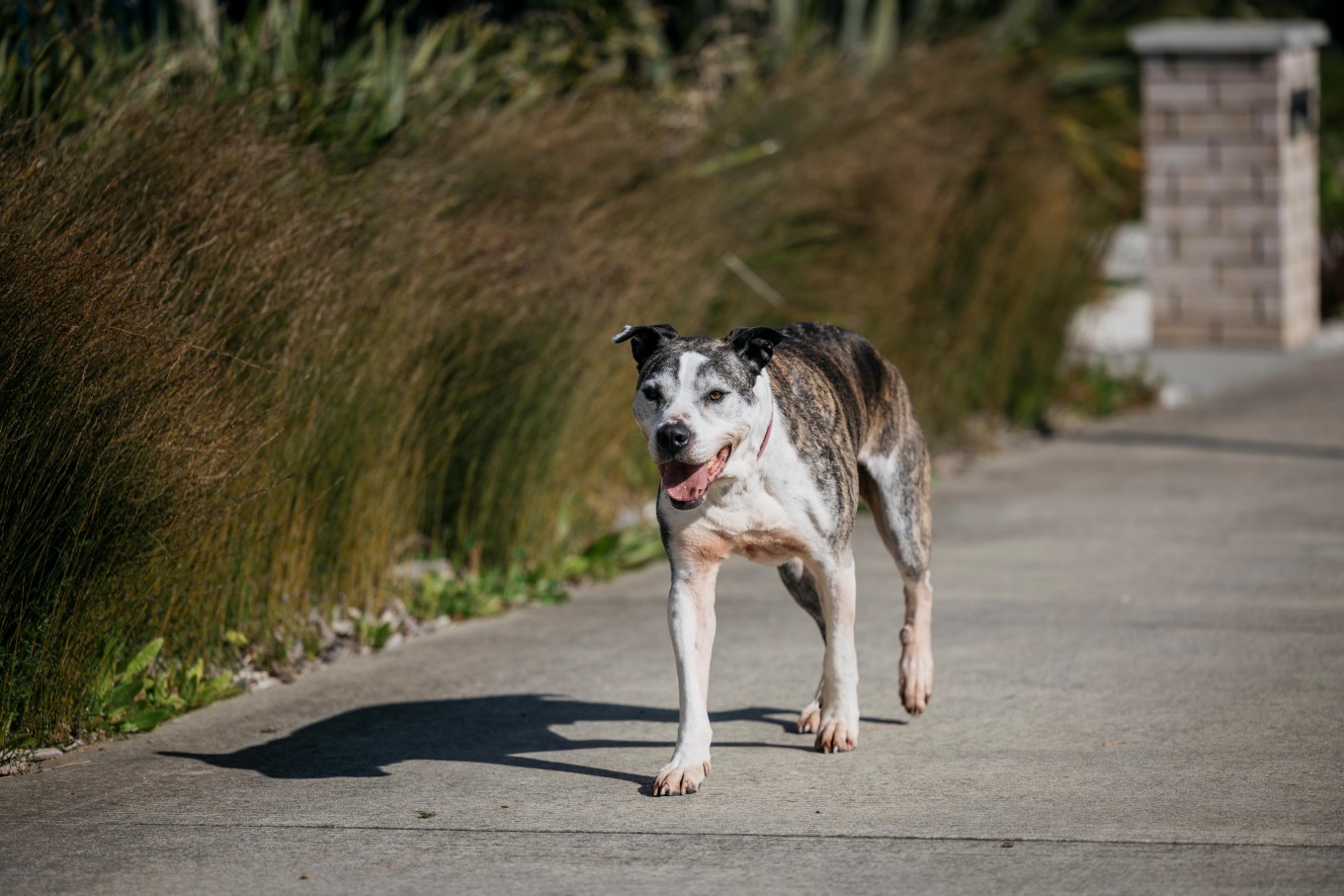
Roaming dog on Auckland street.
Auckland Council’s desexing clinic in Henderson, led by veterinarian Dr Roz Holland, has quickly gained momentum by removing one of the biggest barriers facing dog owners: cost.
“Desexing is expensive, and there are many people who want to do the right thing but simply can’t afford it,” says Dr Holland.
“When that barrier is removed, for most owners saying yes to desexing is incredibly easy. Add in the pick-up and drop-off service, and it becomes a real game-changer.”
The clinic primarily supports dog owners referred by council shelter teams, animal management officers and animal welfare organisations already working with families who need extra support, such as help with food or veterinary care. The service has also been proactively offered in neighbourhoods with higher numbers of roaming dogs, where uptake has been strong.
“Sometimes people are hesitant at first,” says Dr Holland.
“We take the time to talk things through, answer questions and build trust. It’s incredibly rewarding to see the difference this programme makes for both dogs and their owners.”
Dr Holland says she is proud of the team behind the clinic.
“We have an amazing group of people who work hard every day to make sure dogs and their owners have the best possible experience. Helping dogs live healthier lives while making communities safer is something we’re all proud of.”
In April last year, the council also launched a partnership desexing programme with the SPCA. Eighteen veterinary clinics are currently participating in the trial, with Animal Management officers able to issue desexing vouchers directly in the field using their mobile devices.
“It’s another practical tool for our officers and has already made a real difference,” says Waitoa.
Both programmes are funded through infringements under the Dog Control Act, meaning responsible dog owners who register and manage their dogs correctly are not footing the bill.
“The cost sits where it should, with irresponsible ownership,” says Waitoa.
The desexing initiatives form part of a wider council action plan that includes stronger compliance, community education, partnerships and advocacy for changes to the Dog Control Act.
“Reaching 1,000 dogs desexed is a huge milestone,” says Waitoa.
“But it’s also a reminder of the scale of the work ahead. Getting on top of Auckland’s dog population is essential if we want safer streets, healthier dogs and fewer animals entering our shelters.”