

In the early hours of a storm-filled January morning in 2023, as floodwaters rose and isolated homes across Auckland, Ahuroa resident Lena woke with a feeling she couldn’t ignore.
“It was around 3am,” she recalls. “I had strong chest pain, my left hand was numb…I told my husband, ‘I think I’m having a heart attack.’”
Within minutes, she lost consciousness.
Outside, the floods were intensifying. Roads were impassable. Emergency services were stretched. And yet, in the darkness, help was on its way.
Local volunteer first responders Judy and Poppy remember the moment their pager went off.
“The rain was pouring down, the roads were flooded,” Judy reflects. “We knew it was serious.”
Reaching Lena’s home was a challenge in itself. Floodwaters surged across roads and, despite loading up the fire truck rather than their usual ute, the pair recalled how they almost had to “swim” to reach Lena.
“When we arrived, the situation was critical.” Poppy says.
“Lena was in significant pain, really unwell. And we knew we were isolated. There was just no way an ambulance was getting through.”
With evacuation impossible in the dark and unsafe conditions grounding helicopters, the pair got to work - administering medication, monitoring Lena’s condition, and supporting her through the long wait until daylight.
“But it wasn’t just Lena,” Judy adds. “It was about the whole family. The kids were anxious. Everyone was scared. We had to support all of them.”
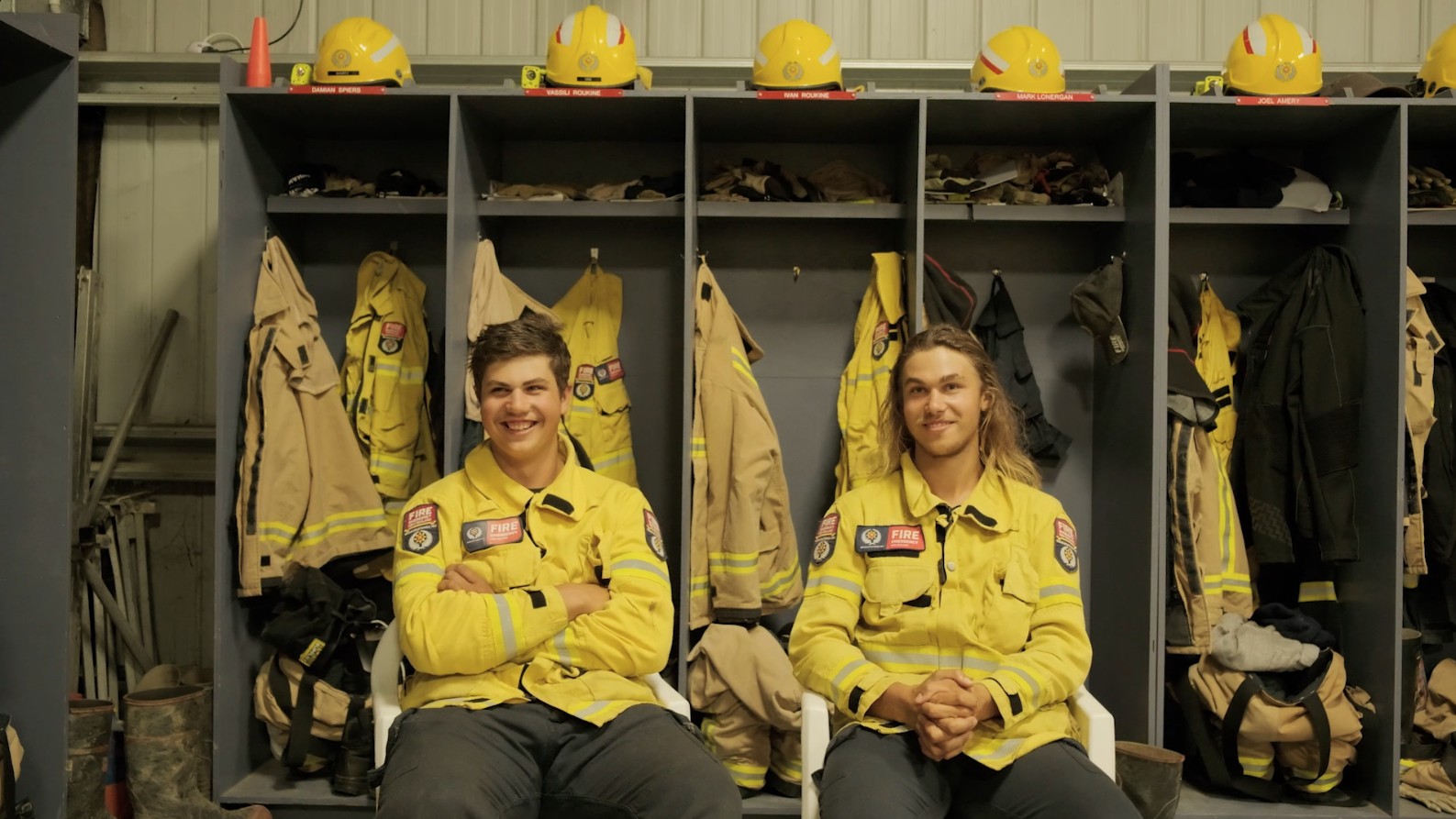
A turning point for Lena’s sons, Ivan and Vasili - who joined the local volunteer fire brigade just weeks later
After the storm
For Lena, much of that night is a blur. What she remembers clearly though was the community’s response during the days that followed.
“The support - people bringing food, checking in” she says. “They were people I didn’t really know before. But they looked out for us.”
What began as a terrifying ordeal became a turning point not just for her family, but for the wider community.
Her two sons, Ivan and Vasili, were among those most affected.
“Seeing what the first responders did that night, it encouraged us to give back.” Ivan recalled.
Within weeks, they were training with the local volunteer fire brigade - joining the same network that once helped save their mother’s life.
“It makes you proud,” Vasili said. “You see what people do for others, and you want to be part of that.”
By community, for community
For Kaiya Irvine, a community recovery specialist working in the Ahuroa region since the 2023 events, stories like this capture the essence of recovery.
“Community-led recovery is about ‘by community, for community’,” she explains. “It’s not about doing things for people - it’s about walking alongside them and giving power back.”
Kaiya reflects that the floods exposed gaps - in infrastructure, response, and connection. But they also revealed something else: the strength already present within communities.
“It was carnage at the time,” she says. “But what followed was people stepping up for each other.”
In rural areas especially, that looks different. Connectivity isn’t guaranteed with neighbours living kilometres apart. Instead, recovery has been built through intentional connection - community dinners, newsletters, and simple acts like checking in on neighbours.
“You don’t have to be best friends,” Kaiya says. “But you should know each other enough to call on one another when it matters.”
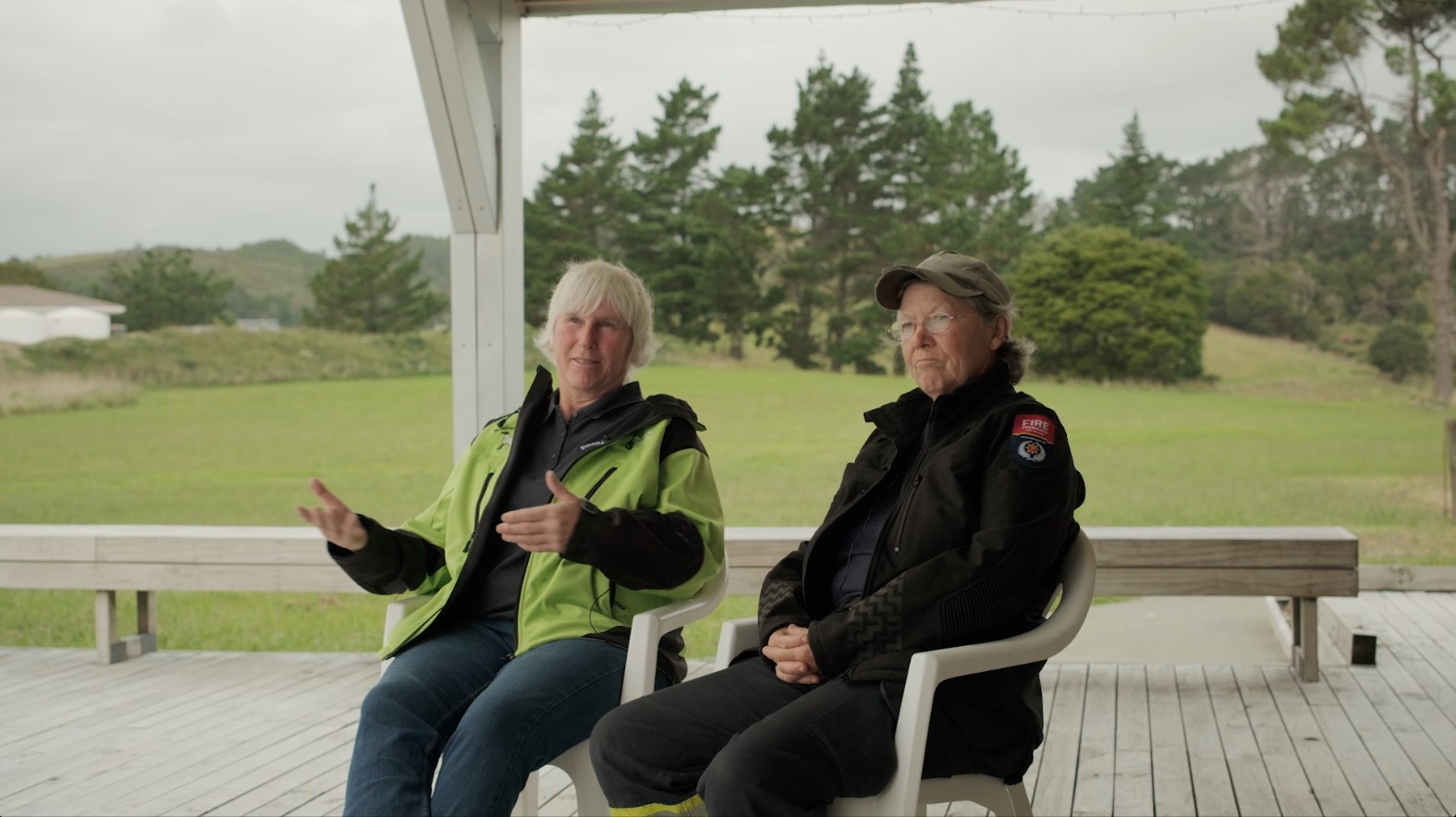
Sue and Karyn helped form the the Araparera Community Catchment Group in the wake of 2023's storm events
Building something stronger
For locals Sue and Karyn, the floods were a catalyst.
“We’d always thought about starting a catchment group,” Sue explains “The floods made it happen.”
What began as a response to extreme weather quickly grew into something broader, forming the Araparera Community Catchment Group - a local network focused on wellbeing, preparedness, and connection.
“It’s all about people,” Karyn says “Talking, supporting each other, finding solutions together.”
Community meetings became a cornerstone. New residents meeting long-time locals, families connecting, and information being shared.
“It’s about making sure no one is isolated,” they say. “Keeping everyone informed and engaged, as we’ve seen, it’s so important in communities like Ahuroa.”
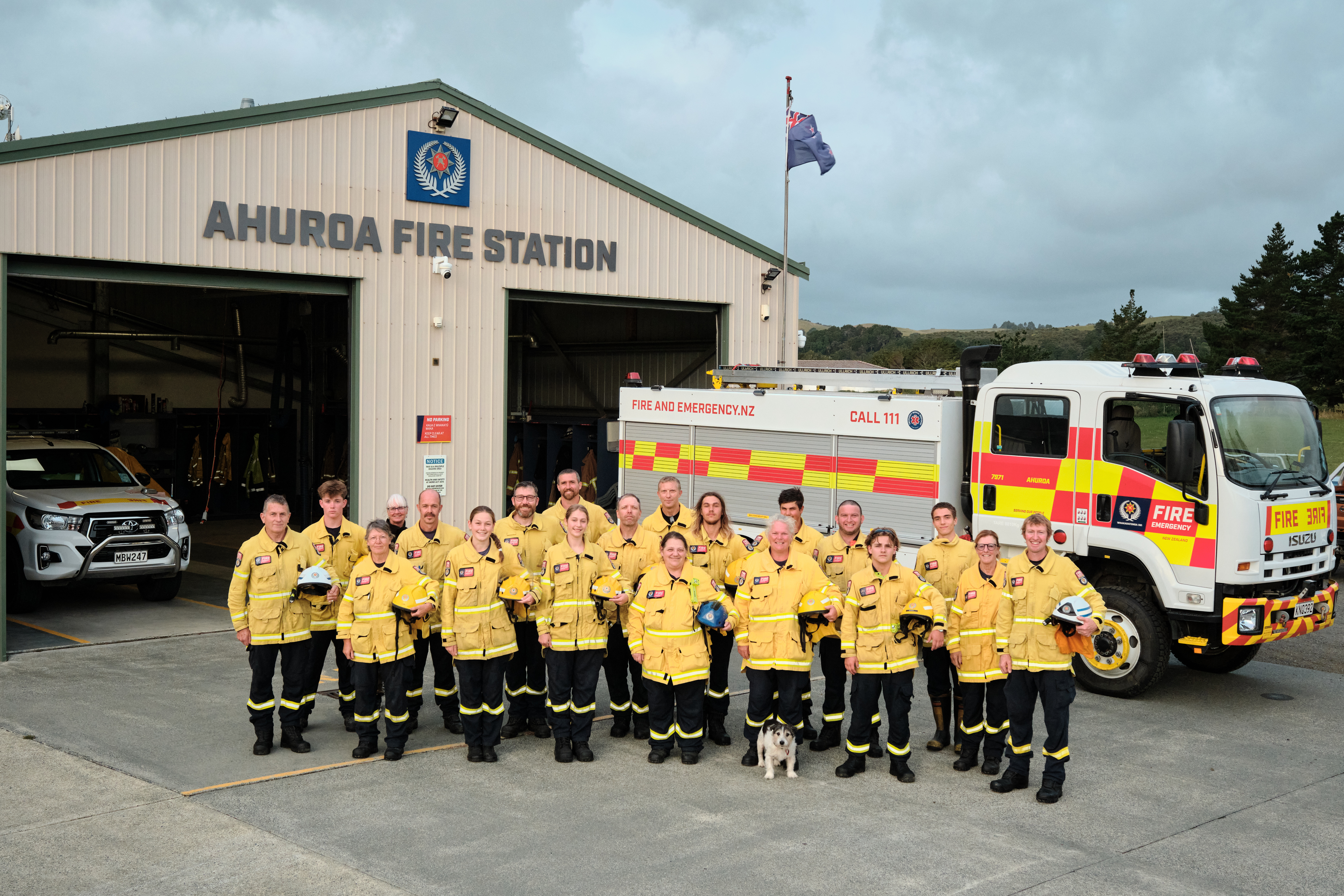
Many community members in Ahuroa are connected through the local Volunteer Fire Brigade
Looking ahead
The events of 2023 reshaped how many in the community think about resilience.
“I have a love-hate relationship with that word,” Kaiya admits. “It gets used a lot. But really, it comes down to connection.”
Ivan agrees: “Everyone brings something different during these situations - medical skills, tools, even tractors. When you’re connected, you can use all of that.”
Across Ahuroa, the community certainly feels that future events won’t come - but that they’ll be faced differently.
“We’re definitely better prepared,” Judy says. “People aren’t on their own anymore.”
“We’re not perfect,” Karyn adds. “But we’re on that journey. We understand more. We’re having the conversations.”
And for Lena, whose medical emergency became an unexpected thread tying the community together, her message to other communities is simple:
“Support each other,” she says. “You never know when you might need help - or when someone else will.”