


Not the flapping, squawking kind you might expect but careful hands and a race against the clock to get everything just right. On Tuesday (5 May) that magic unfolded as tiny pōpokotea (whiteheads) began a new chapter, travelling from the predator-protected safety of the open sanctuary at Shakespear Regional Park to a restored coastal landscape at Mataia on the Kaipara.
Forty of these lively native birds were reintroduced as part of a wider effort to bring back the natural chorus of the region. Once common across northern New Zealand, pōpokotea disappeared from many areas due to habitat loss and introduced predators. Now, thanks to years of conservation work, they’re making a comeback.
At Shakespear, that comeback didn’t happen overnight.
Auckland Council’s Regional Parks Manager, Scott De Silva says council is proud to be able to share these birds with Mataia
“At Shakespear Regional Park, it’s taken years of careful work by staff and volunteers from the Shakespear Open Sanctuary Society (SOSSI) to re-establish pōpokotea, but we’re now seeing a strong, stable population. That success puts us in a position to support other sites to bring these manu back to areas where they once thrived.
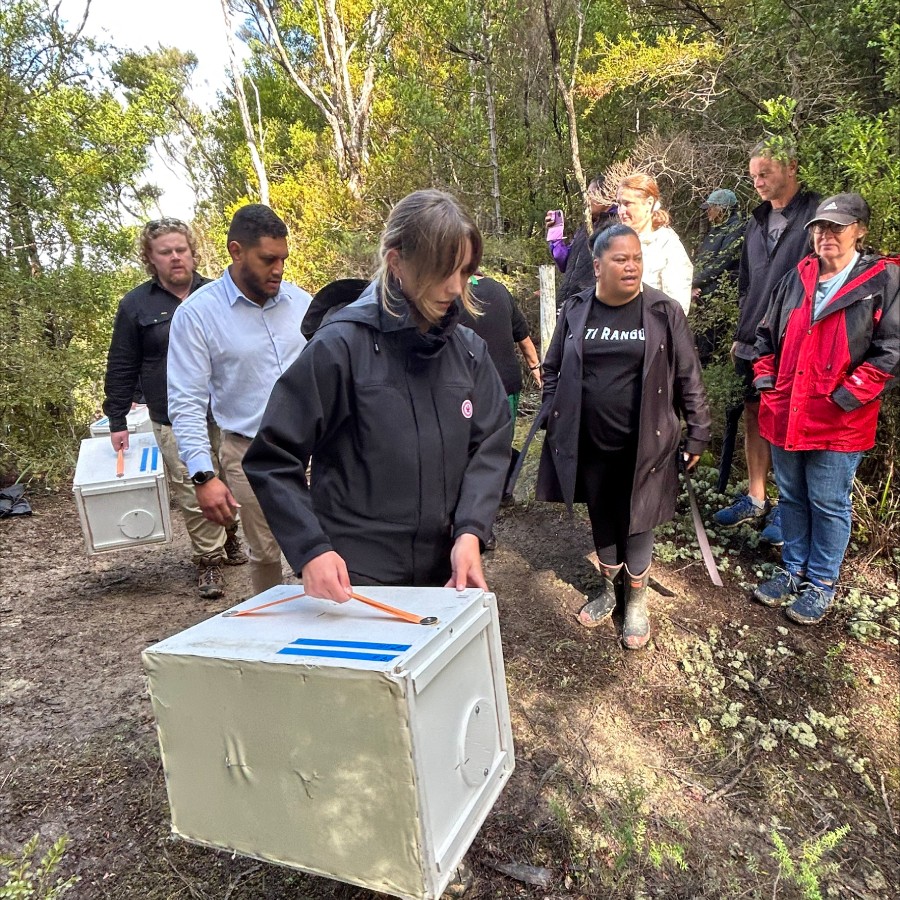
Pōpokotea / whitehead arriving at their new home in Mataia.
“Translocations like this are a vital part of restoring birdlife across the region, and it’s great to see that effort extending into the Kaipara landscape.”
Chair of the Planning, Policy and Development Committee, Councillor Hills, says the moment carries both pride and a sense of paying it forward.
“It’s incredibly special to be in a position where we can share these birds and help establish a new population. Years ago, Shakespear benefited from translocations from Tiritiri Matangi, and to now be able to return that same generosity and support another site is something pretty powerful.
“We were once on the receiving end of this kind of generosity, with translocations from places like Tiritiri Matangi helping to re-establish species here. To now be in a position to return that favour and support other restoration projects is incredibly meaningful.”
The success at Shakespear is also deeply connected to mana whenua.
Nicola Rata MacDonald, Chief Executive Officer of Ngāti Manuhiri Settlement Trust, mana whenua of Shakespear Open Sanctuary, says the translocation reflects years of collective effort and care for the whenua.
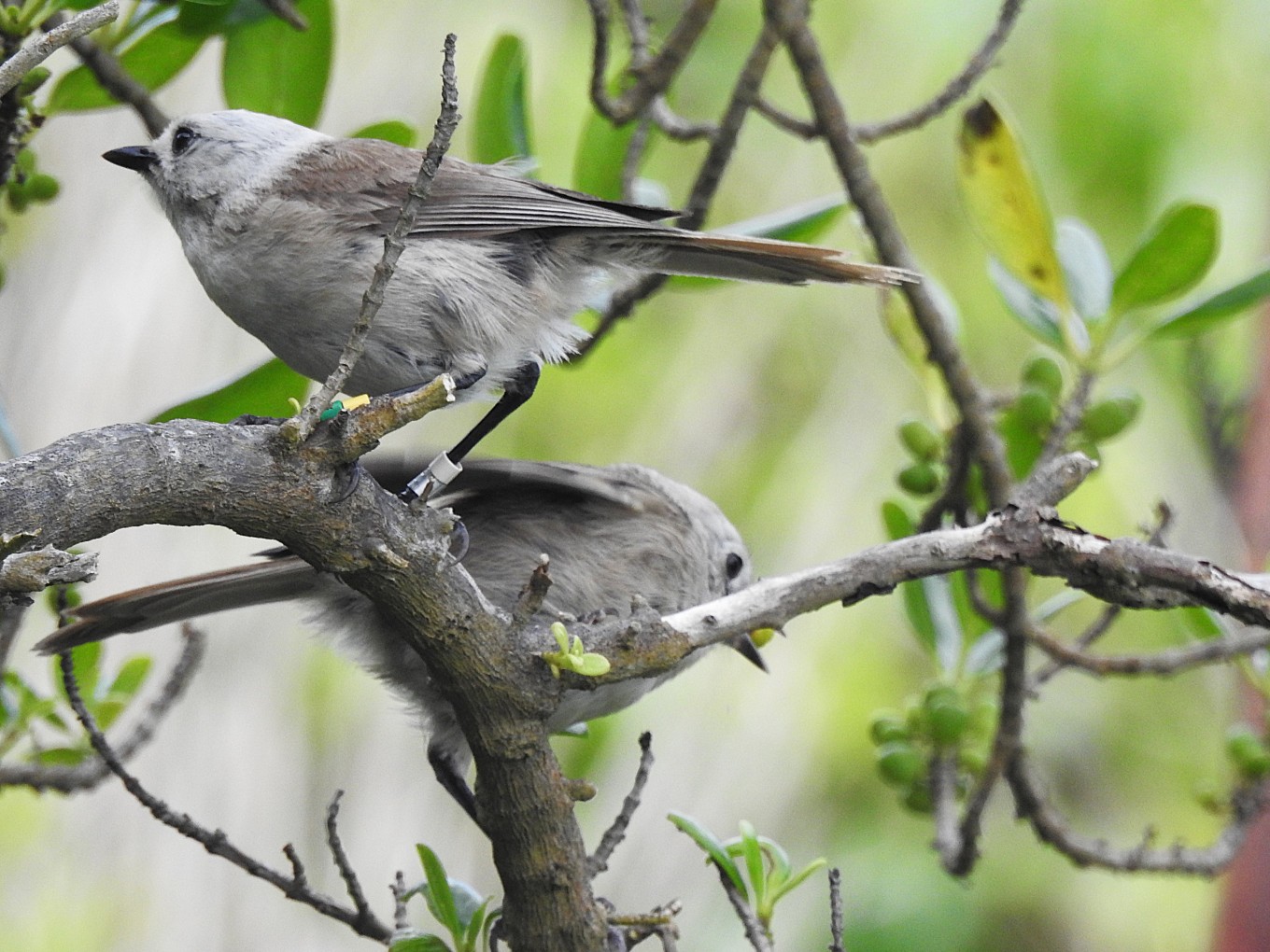
Pair of native pōpokotea / whitehead settling into their new home at Mataia. Photo credit: Neil Davies
“Seeing pōpokotea thriving at Shakespear shows what’s possible when restoration is guided by kaitiakitanga. Supporting their journey to Mataia helps ensure these manu continue to flourish across the wider landscape.”
The move itself is a finely tuned operation. Birds are carefully captured and transported on the same day to minimise stress, before being released into high-quality habitat with plenty of food and shelter waiting. At Mataia, a 400-hectare restoration project has been quietly transforming a coastal farm into a haven for wildlife, with intensive pest control targeting rats, stoats and possums.
That groundwork matters. A safe environment gives these small birds their best shot at settling in, pairing up, and eventually raising the next generation.
For Ngāti Whātua o Kaipara, the arrival of pōpokotea represents a meaningful reconnection.
“Welcoming pōpokotea to Mataia strengthens the mauri of the whenua,” a spokesperson says.
“It reflects the shared commitment of mana whenua, landowners and the community to restore balance and protect taonga species for future generations.”
The project is powered by people as much as it is by place.
Kevin and Gill Adshead of the Mataia restoration project say the arrival of pōpokotea is a significant milestone for both their land and the community supporting the project.
“This is made possible by the support of the wider community who have worked hard on predator control to make it safe enough for the birds to live here,” says Gill Adshead.
“Kevin and I are blown away by just how invested people are in this project. Our vision was to bring back the diversity of nature that once thrived here — this certainly adds to that goal
Volunteers will now help monitor the pōpokotea as they explore their new home, tracking how the population grows and spreads. It’s not just about numbers; it’s about rebuilding an ecosystem, one species at a time.
Because sometimes, restoring nature starts with something small.
Like a flock of whiteheads, finding their way home again.