


The Central Interceptor wastewater tunnel is set to make an outsized contribution to the quality of water in the city’s prized Waitematā Harbour.
With more than 3200 kilometres of diverse coastline, an abundance of beaches and three harbours, Aucklanders are spoilt for choice.
Swimming, sailing, surfing and jumping into the sea from boats and jetties are in the region’s DNA. And that summer heritage is getting a lift.
Watercare’s 16.2 kilometre, 4.5-metre-diameter wastewater tunnel known as the Central Interceptor is marking a significant step forward in the water quality Aucklanders can expect at beaches along the inner harbour, from St Mary’s Bay to Point Chevalier. In late July 2026, the northern half will go live, making the tunnel fully operational and enabling the next phase of environmental benefits to be realised.
Mayor Wayne Brown says that as an engineer himself, he appreciates the skills involved in completing this project.
“It’s a significant milestone for Aucklanders and a huge engineering feat. This is an important piece in fixing and finishing Auckland’s infrastructure and will take pressure off other parts of the network,” says Mayor Brown.
Councillor Andy Baker, Chair of Auckland Council’s Transport and Infrastructure Delivery Committee, sees the Central Interceptor as a benchmark for future infrastructure works.
“This is an incredibly important project for many reasons, not least of which is protecting our inner-city beaches from historic wastewater overflows.
“Seeing this completed largely on time and without major budget blowouts is something we should appreciate and learn from,” he says.
Jamie Sinclair, Watercare chief executive, says it is a city-shaping project designed to support the central beaches and also unlock the next generation of water quality improvements for Auckland.
“With the Central Interceptor about to become fully operational, the city will experience some immediate wins, and then many more gains in the long-term as the tunnel enables further local improvements through the joint Waitematā Water Quality Improvement Programme.
“The Central Interceptor is a key part of an exciting programme of work planned across two organisations – Watercare and Auckland Council – to further improve environmental outcomes for our marine environment and the beaches that Aucklanders enjoy,” he says.
Watercare is investing around $13.8 billion into its capital delivery programme over the next ten years, and Auckland Council is investing $450 million over the same period, with an additional $650 million planned within the 30-year horizon.
“I am proud that our team has delivered this key project on time and close to the original budget, something that is almost unheard of for mega-projects like this,” says Mr Sinclair.
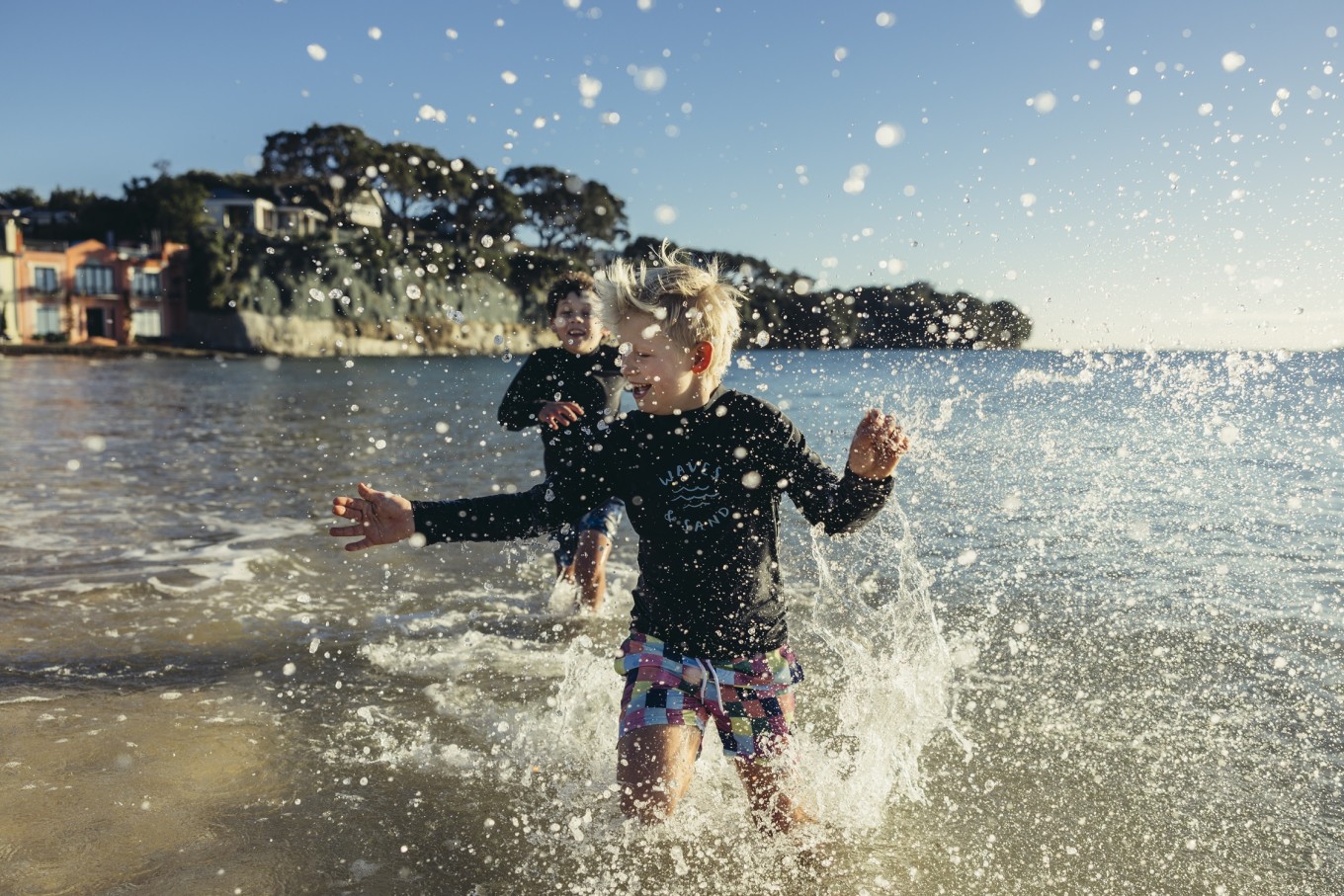
Auckland summers would be unimaginable without swims at the beach. Photo credit: Jay Farnworth.
What are the wins?
Auckland Council Head of Network Planning, Nick Vigar cites two key objectives Watercare has met in delivering the Central Interceptor: a step-change in water quality, and future-proofing for growth.
He says even though 90% of Auckland has separated pipes for wastewater and stormwater already, there is still a lot of ongoing investment needed to keep Auckland’s water healthy in a future with continuing population growth.
“The Central Interceptor is a tunnel big enough to pick up and move significant volumes of overflow from the central suburbs to Watercare’s Māngere Wastewater Treatment Plant.”
“Currently, there are hundreds of overflow points into the Waitematā Harbour along the inner harbour’s northern coastline. Some beaches can experience many dozens of wastewater overflow events per year, which are shown on Safeswim as black pins. When the Central Interceptor and supporting works including the Herne Bay Collector are fully operational, it is predicted that there will be around six.”
“One note of caution though - the Central Interceptor will deliver a step-change, but it will not deliver perfection. Over the next 30 years Watercare and Auckland Council have significant investment planned for programmes to build new wastewater and stormwater infrastructure across the Auckland isthmus.”
“As this integrated solution is progressively constructed, we will continue to see improvements in the water quality of the Waitematā, whilst also providing for growth by reducing stormwater volumes in the wastewater network in the long-term,” Mr Vigar says.
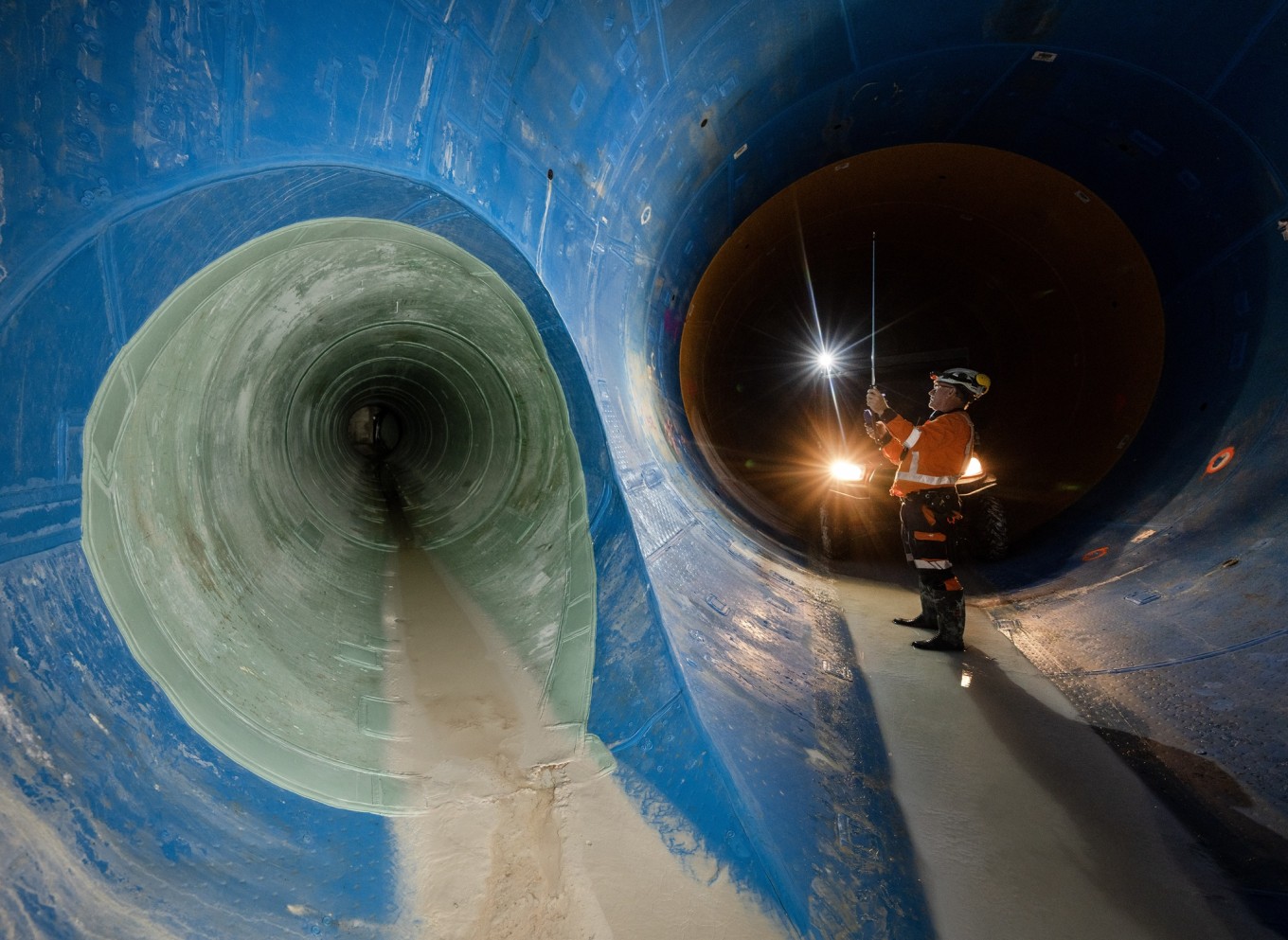
Central Interceptor; photo credit Watercare.
What is being built, why, where and when?
New Zealand’s largest ever wastewater tunnel runs from Point Erin in Herne Bay to the Māngere Wastewater Treatment Plant at depths of between 15 and 110 metres below the surface, including a stretch underneath the Manukau Harbour.
It has two link sewers – one gathering wastewater and stormwater flows from Mt Roskill and Blockhouse Bay; the other catching flows from Mt Albert.
The Ghella Abergeldie Joint Venture was contracted to deliver this $1.66 billion super-sized sewer. Construction began in 2019, with the southern half of the tunnel going live in early 2025. This has already had a favourable environmental effect - as of March this year, the southern half of the tunnel had prevented an estimated 450,000 cubic metres of wastewater and stormwater from spilling into the environment.
In late July 2026, the northern half of the Central Interceptor will go live.
When completed in late 2028, the Herne Bay Collector wastewater tunnel will connect to the Central Interceptor. This project will include a 2.1-metre-diameter, 1.7km tunnel, seven main shafts and three intermediate shafts.
Being among the region’s earliest suburbs, central Auckland started life with one pipe for both stormwater and wastewater. Those days are over.