


Innovative Swiss technology being trialled on Auckland’s North Shore could help reduce thousands of tonnes of sediment waste from going to landfill, while supporting healthier streams, estuaries and harbours.
The Swiss-engineered mobile dewatering plant is being used in New Zealand for the first time at a stormwater pond in Wairau Valley. The trial is exploring a smarter, lower-carbon approach to removing and managing sediment collected in Auckland’s stormwater ponds to protect waterways.
Stormwater ponds are a critical part of Auckland Council’s efforts to prevent pollution of the much-loved beaches of Tāmaki Makaurau. They capture and treat run-off from roads, rooftops and car parks, trapping sediment and contaminants before they can enter streams, estuaries and harbours.
To keep the ponds functioning effectively, accumulated sediment must be removed regularly. Around 14,000 cubic metres of sediment - the equivalent of five and a half Olympic-sized swimming pools - was removed from Auckland’s stormwater ponds last year.
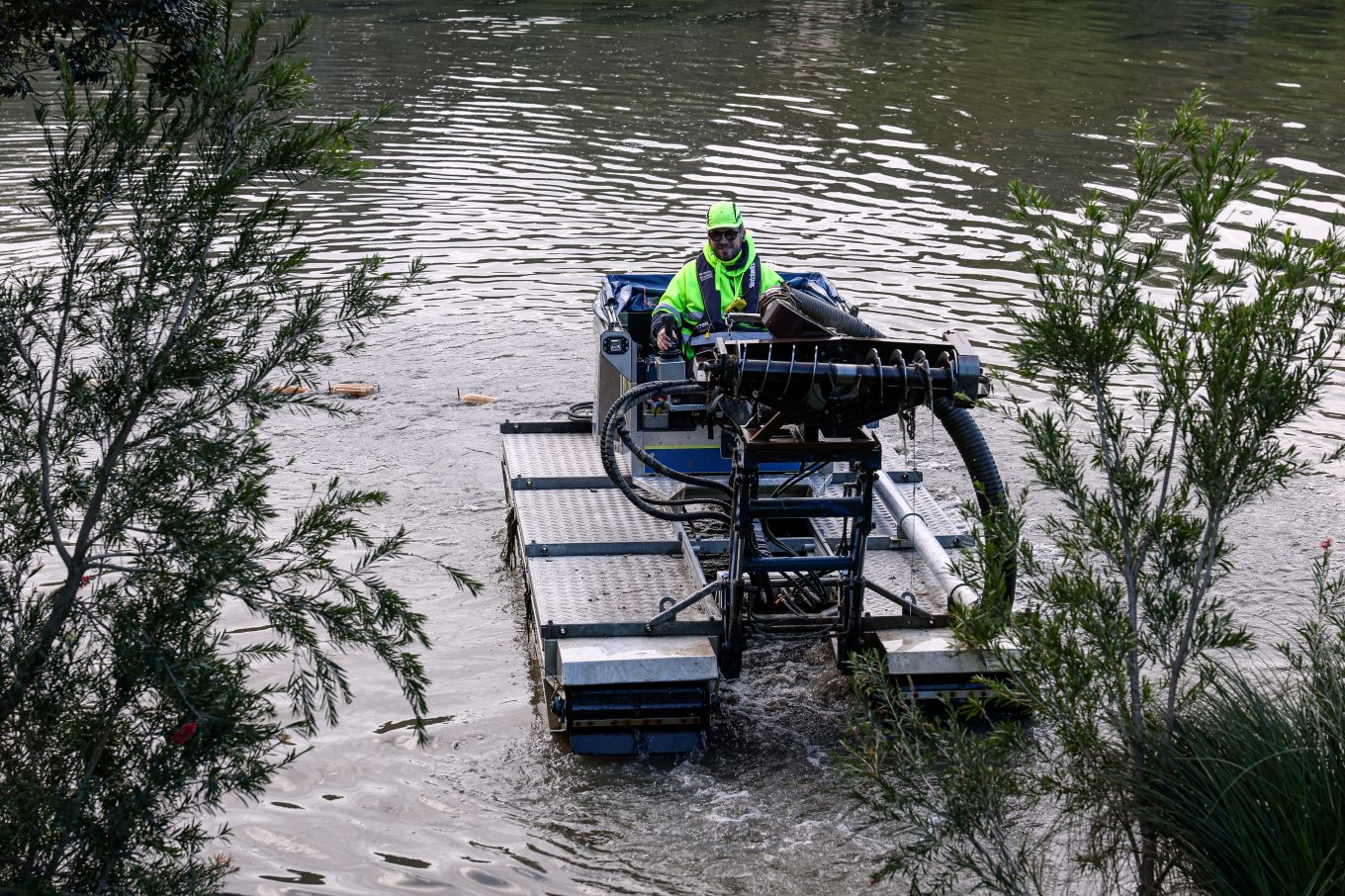
An excavator removes the sediment from the pond before it goes through the machine.
Over the next 20 years, approximately 2.2 million cubic metres of sediment is expected to be removed from Auckland’s stormwater ponds.
North Shore Councillor Richard Hills says the technology being trialled has the potential to reduce sediment going to landfill from stormwater ponds by 60 per cent while also reducing transport-related emissions.
“The health of our waterways is a priority for Aucklanders, and these ponds play a vital role in stopping sediment reaching our streams, estuaries and harbours,” says Cr Hills.
“If we can transform how we remove the sediment from these ponds, we will significantly reduce the waste going to landfill and the carbon emissions associated with transporting that waste.”
Unlike current methods, the mobile plant processes sediment on site, removing water and separating sand, gravel and stone in a single operation.
This approach significantly reduces the volume and weight of material requiring disposal. The separated sand and gravel may then be reused as fill or aggregate, while the remaining silt may be used on site for topsoil and planting.
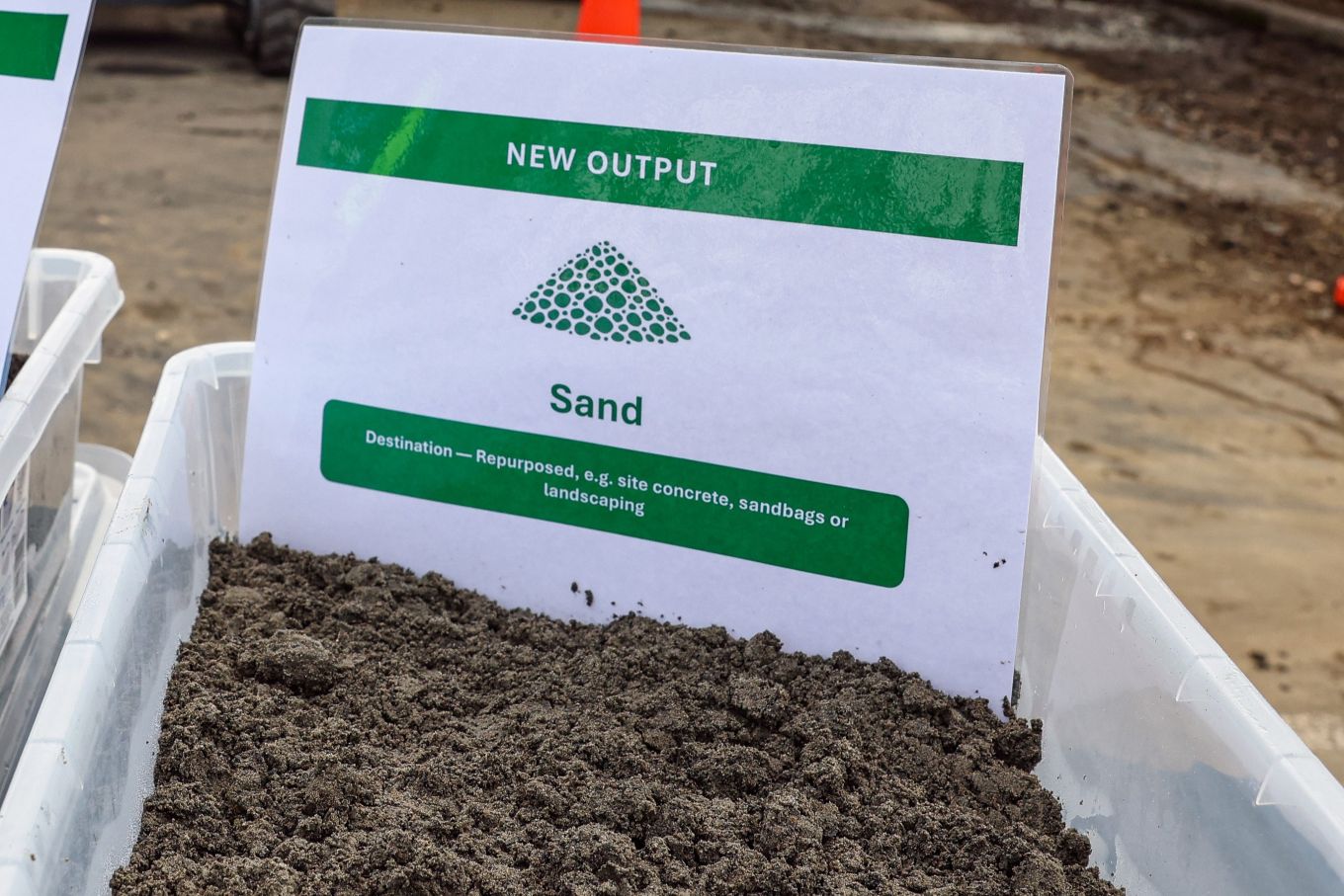
One of the end products – sand – can be reused for site concrete.
Healthy Waters and Flood Resilience Head of Sustainable Partnerships Tom Mansell says the trial comes at a critical time, with many of Auckland’s ponds requiring sediment removal to maintain their performance.
“Last year the equivalent to five and a half Olympic swimming pools were removed from our stormwater ponds,” says Mr Mansell.
“This technology has the potential to reduce the volume of material sent to landfill by up to 60 per cent by separating and recovering sand, gravel and water on site rather than disposing of the whole lot."
The technology was imported by Glasgow Contractors, which is leading the trial.
Kade Glasgow says the Wairau Valley project provides an opportunity to test and verify the system’s performance in New Zealand conditions.
"This new system is capable of extracting a much higher percentage of dry solids from the sediment than the 10 to 20 per cent from using conventional methods - that's what we're here to test and verify,” says Mr Glasgow.
“If the trial proves successful, it could deliver meaningful reductions in landfill volumes, truck movements and carbon emissions across Auckland.”
The project has also attracted international interest, with Swiss Ambassador to New Zealand Viktor Vavricka visiting the Wairau Valley site this week to see the technology in action.