


Why are some Auckland locations in higher demand than others? Why do some people choose to live closer to jobs and public transport? And what role should planning play in shaping how the city grows?
These are questions that have occupied urban planner Alain Bertaud for more than 50 years.
Earlier this year, Bertaud – one of the world's leading urban planners and former Principal Urban Planner at the World Bank – shared his thinking at Auckland Conversations. At the heart of Bertaud's thinking is a surprisingly simple idea.
Cities are labour markets.
For Auckland Council Chief Economist Gary Blick, the idea that cities are labour markets helps explain why housing, transport and infrastructure are so closely connected.
“Housing, transport and planning rules are sometimes discussed separately,” says Blick. “However, Bertaud reminds us that they're really different parts of the same system, because together they shape how people access jobs, services and other opportunities.”
Cities connect people with opportunity
People often think of cities as places where people live. Bertaud argues they're something more fundamental. They are places that connect people with jobs and opportunity.
People rarely spend their entire careers in one job. As their skills and circumstances change, they need access to different employment opportunities. Living in locations with good access to jobs, whether through living nearby or via effective transport connections, gives people more choices. It can shorten commutes, make it easier to change jobs and help businesses find the workers they need.
That's why economists say access has economic value.
“Bertaud's insight is that cities work best when people can easily access jobs that best match their skills," says Blick. "When that doesn't happen, workers have fewer opportunities, businesses find it harder to recruit the right people and productivity suffers.”
Why some places become more valuable
Bertaud argues that accessibility is one of the main drivers of how cities grow.
Locations with better access to jobs and opportunities tend to attract more people and command higher land values. As demand increases, land values rise, and more intensive development becomes commercially viable.
Auckland also shows many of these characteristics. Population density tends to be higher closer to the city centre before gradually declining with distance, reflecting the trade-offs people make between accessibility, housing costs, and space.
“Households have different preferences,” says Blick. “People trade off location, cost, space and access in different ways. Some choose a smaller home closer to work. Others prefer more space and are happy to travel further. Those trade-offs change throughout people's lives, which is why cities need to enable a range of housing choices.”
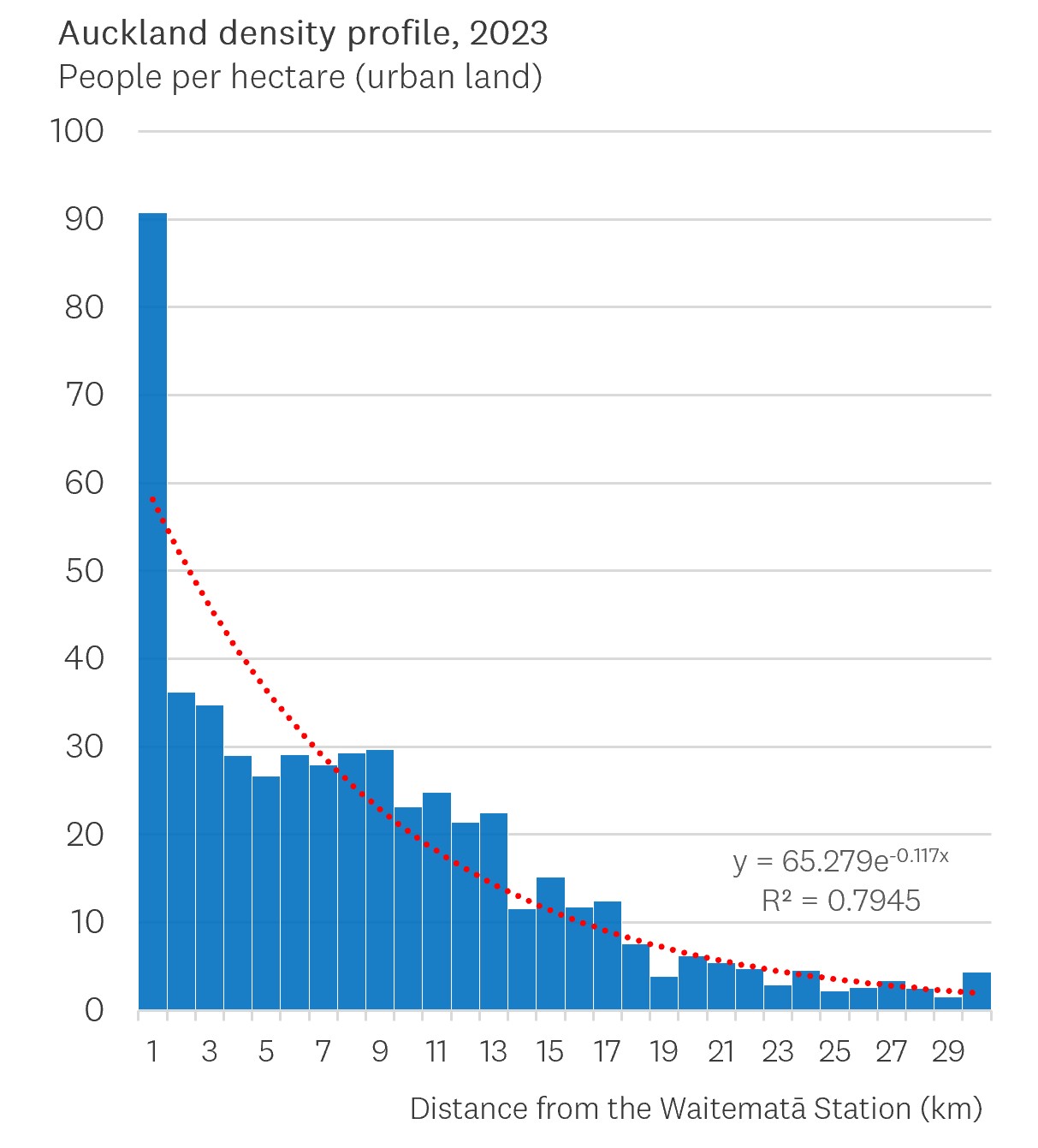
Source: Stats NZ, Auckland Council Chief Economist Unit
What role does planning play?
Bertaud does not argue that cities should simply be left to market forces.
Instead, planning should enable housing choices across different locations allowing households to choose the combination of accessibility, cost, and space that best suits them, rather than trying to predict household choices in advance.
“Bertaud's point is that planning should enable choice,” says Blick. “That means enabling a wide range of housing options across different locations and price points so households can choose what best suits their circumstances.”
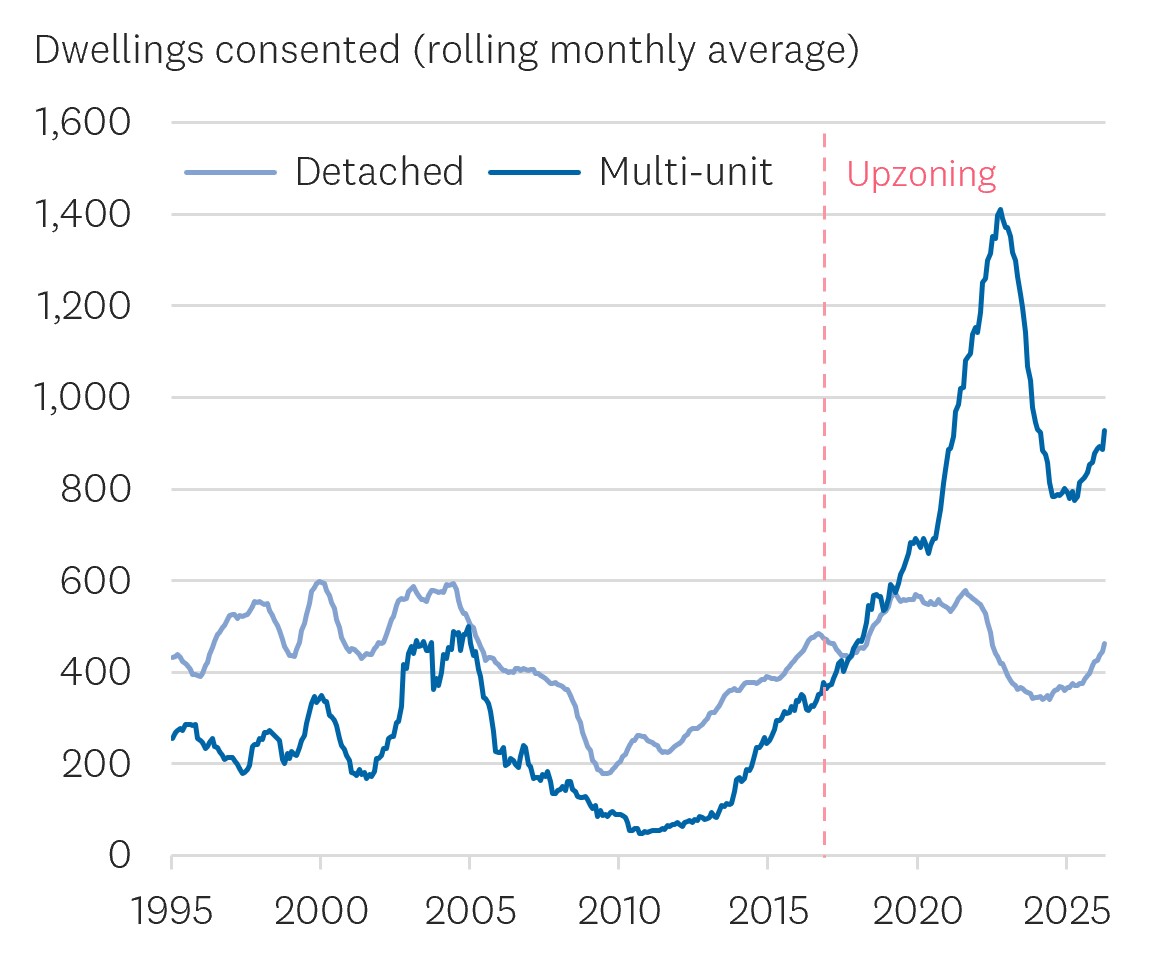
Building consents for multi-unit housing increased significantly following the Auckland Unitary Plan, providing one example of how cities can monitor the outcomes of planning policies over time. Source: Stats NZ, Auckland Council Chief Economist Unit.
Learning from evidence
Another of Bertaud's central ideas is that cities should continually learn from evidence.
Bertaud argues that planning doesn't end when policies are adopted. Cities should continually monitor outcomes, learn from the evidence and adapt their planning settings as conditions change.
Cities should monitor outcomes using indicators such as land values, rents, building consents and housing density to understand whether existing planning policies are achieving their intended outcomes.
He pointed to Auckland as one example. Following the Auckland Unitary Plan in 2016, building consents for multi-unit housing increased significantly, while Auckland's rental affordability improved relative to the rest of New Zealand.
“For Bertaud, these are the kinds of outcomes cities should monitor,” says Blick. “They help us understand how people respond when more housing choices become available and whether our policy settings are achieving their intended outcomes.”
“Bertaud's broader message is that cities should continually monitor what is happening, learn from the evidence and adapt over time,” says Blick.
Lessons for Auckland
For Blick, Bertaud's ideas provide a useful framework for thinking about Auckland’s future.
“Accessibility is really about opportunity,” he says. “Transport, housing and planning all matter because together they determine how easily people can access jobs, education and services.”
Ultimately, Bertaud argues that successful cities are those that give more people access to jobs and opportunities. For Auckland, that means continuing to plan for growth in a way that expands housing choice and supports a city where more people can live close to work, school, shops and other everyday needs.