


From mana whenua and neighbourhood groups, to faith leaders and young people, communities across Tāmaki Makaurau are deciding what their storm recovery looks like, and how to prepare for the future.
When devastating storms hit Tāmaki Makaurau in early 2023, the damage was widespread, with lives lost, dangerous landslides, and chest-high floodwaters in some areas.
While the storms left scars across the region, the recovery process is creating something more enduring: stronger communities. By giving locals the lead to shape what’s next, and backing mana whenua and community partners to help drive it, affected communities are not only recovering from the past; they’re preparing for the future.
Strong communities bounce back better
Community-led recovery planning is about more than fixing what's broke, like roads, homes and community spaces. It’s a future-focused process where locals identify what matters most for their people and place, then agree on the steps to make it happen.
Tāmaki Makaurau Recovery Office’s Head of Community and Social Recovery, Linda Greenalgh, says strong communities bounce back better from disasters.
“We know that communities who have a high degree of connection and self-determination recover better and become more resilient for next time. The silver lining of these devastating storms is that they have brought neighbours and local groups together, many who didn’t even know each other. This work is about making sure those connections, and this momentum, continue.”
While the council and government work on fixing infrastructure, community recovery is about people themselves deciding what they need to heal and prepare for the future.
To enable this, the Tāmaki Makaurau Recovery Office is supporting community partners across 25 storm-affected neighbourhoods, and 10 mana whenua to lead planning across their rohe (areas).

The launch of the first Adapting Together retreat at Te Aroha Pā Marae. Photo credit: Caroline Ducobu.
Ensuring no-one gets left behind
A core principle of community-led recovery is that every voice counts - especially those from diverse or hard-to-reach groups who are often overlooked. Making space for different perspectives is not just about fairness; it’s what ensures recovery efforts reflect the full needs of a community and builds resilience that lasts.
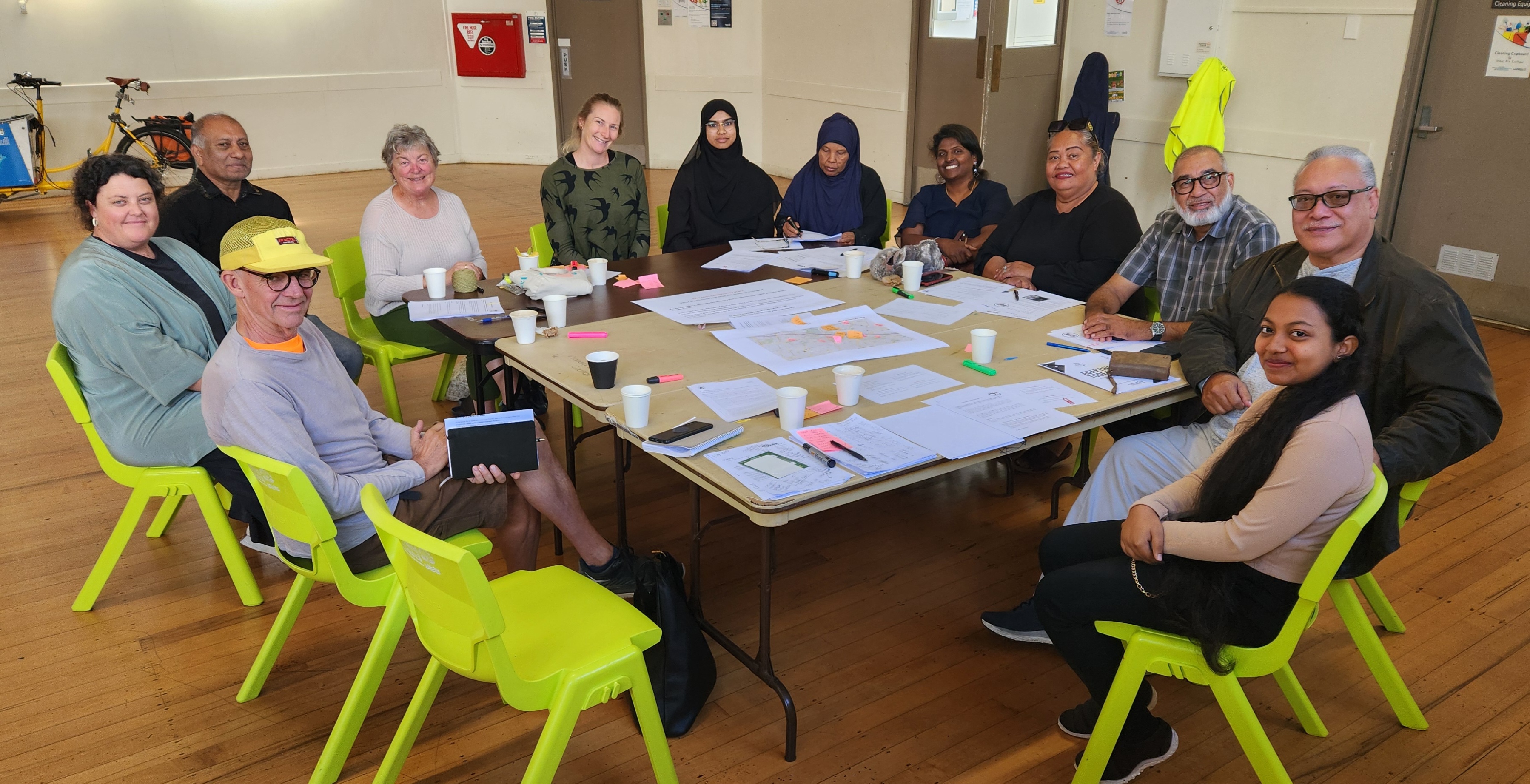
In Mt Roskill and Wesley, a recovery planning leadership rōpū (group) made up of a diverse range of community members supported a workshop in eight different languages, alongside ethnic and youth festivals, and picnics that brought people together in simple but powerful ways.
Richard Barter, who sits on the Mt Roskill and Wesley Recovery Leadership Rōpū, speaks to the benefits of diversity and resources community partners can draw on.
“This dynamic group of leaders have all played a part in supporting those affected by the floods. We are fortunate to have the resources to help us engage with the community, so that we can discover where they are in their recovery journey, and what it’s going to take for them to feel safe in the future.”
In Māngere, where faith shapes everyday life, a forum of pastors, imams, elders and other religious leaders has grown to include wider community voices.
In Kaipātiki, street barbecues, library displays and Mandarin-language sessions have ensured the growing local Chinese community share their experience.
Together, these efforts show that when recovery planning actively includes everyone, it creates stronger trust, connection, and confidence for the future.
Making experiences visible
Communities are also finding creative ways to share their stories, recognizing that acknowledging loss is an essential step in healing and recovery. In the East Coast Bays, Auckland North Community and Development supported creative workshops that culminated in a collaborative art installation, capturing residents’ experiences and hopes for the future.
Puhoi residents contributed to a photo exhibition of more than 300 images of local places, people and events, with contributors and visitors sharing their ideas for the community’s future and what mattered most to them. In Milford, a public storyboard was created and has been installed in multiple locations across the storm impacted areas of Milford. It is prompting conversations about what happened, what stands now, and what people want to see next.
“While many are ready to move forward, others are still healing – and that’s okay. Everyone’s journey is different. But one thing is clear – people want to see something good come from this,” says Debbie Dunsford from the Milford Residents Association.

Emerging priorities
Across affected communities, clear priorities are emerging for long-term resilience:
- Rebuilding neighbourhood connection and social cohesion
- Improving emergency preparedness and resilience
- Building stronger local leadership capabilities
- Strengthening infrastructure resilience and environmental regeneration
- Housing and insurance affordability.
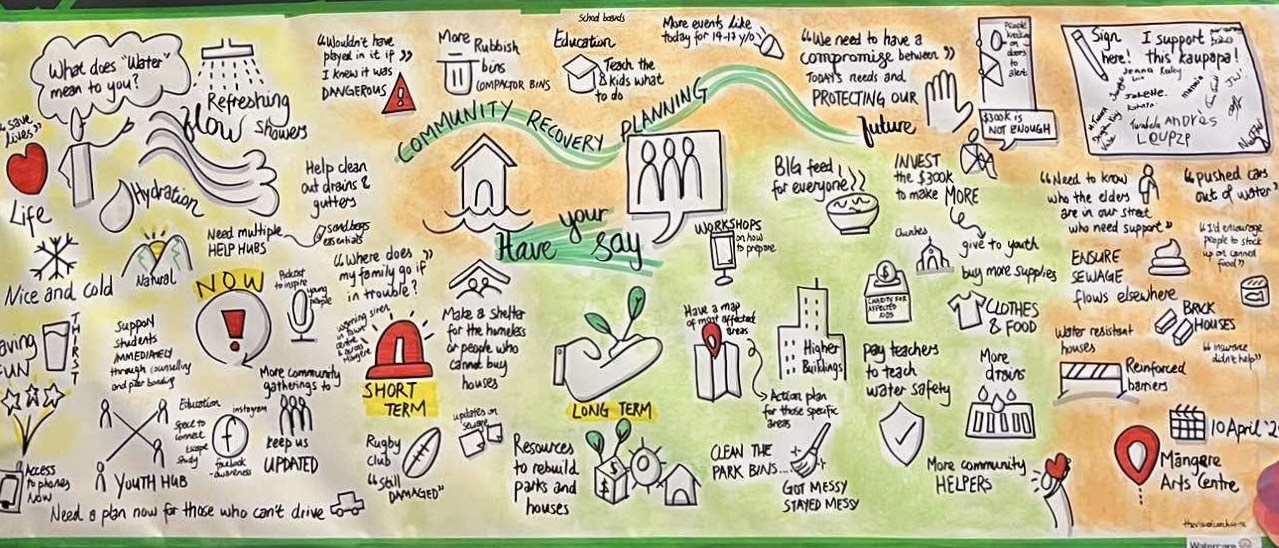
Areas like Māngere, Milford, Rānui and Mt Roskill/Wesley face significant change with the removal of many high-risk Category 3 homes, alongside major infrastructure projects. Navigating this change has been a key priority in these communities.
In the Henderson-Rānui area, Te Kawerau ā Maki is partnering with McLaren Park Henderson South and the Rānui Accord to embed recovery within its existing plans and kaupapa (approach). A hui (meeting) of more than 30 locals also worked through difficult conversations on housing displacement, wellbeing and social connection. With information from this and other key hui, they are now forming the basis of a Rānui Recovery Plan.
So, what do next steps look like?
Some communities are just beginning their planning, others are finalising local priorities, and a few are already moving into implementation. Based on priorities, next steps could be anything that helps the community to recover and improve its resilience, from coastal adaptation activities and emergency preparedness training, to planting days and transforming damaged land into community spaces.
Upcoming projects with mana whenua shine a light on the variety of approaches being taken.
Ngāti Maru will employ a dedicated staff member to support integrating traditional wisdom and mātauranga into council’s interactive maps and to help build early warning systems and risk mitigation. At Ihumātao, Te Ahiwaru are restoring native canopy and kai practices to strengthen both cultural connection and local food resilience. Ngāti Te Ata are leading planting and adaptation work that both heals the land and prepares whānau for the future.
Whatever the project, the principle is the same: recovery is strongest when it’s led by the people who live there.
The storms may have scarred Auckland, but the recovery process is creating something more enduring: resilient, connected communities with the confidence to face whatever comes next.
Get in touch with your recovery planning leads
To see the full list of groups working on community recovery planning, and their contact details, check out: Mana whenua and communities to drive recovery plans.