


New analysis from Auckland Council Chief Economist, Gary Blick, highlights how local policy choices – particularly around land use and infrastructure – can help boost Auckland’s productivity.
Auckland is an economic engine that is not firing on all cylinders, but local policies that better use urban land can help improve productivity and, in turn, support higher wages and living standards.
“Productivity – the ability to produce more goods and services from our resources – drives economic growth, and the way cities grow and function has a big influence on productivity,” says Blick
“The key to this is enabling more homes near jobs, transport, and services in high-demand central locations.”
Auckland’s potential to perform better
Auckland plays a major role in the national economy, contributing $157 billion in 2024, around 38 per cent of New Zealand’s Gross Domestic Product (GDP).
“Auckland’s GDP is about 13 per cent higher on a per person basis than the national average.” says Blick. “That sounds good but when you compare it internationally, it’s underwhelming. In smaller economies, the main cities typically outperform their national average by 25 to 35 per cent.”
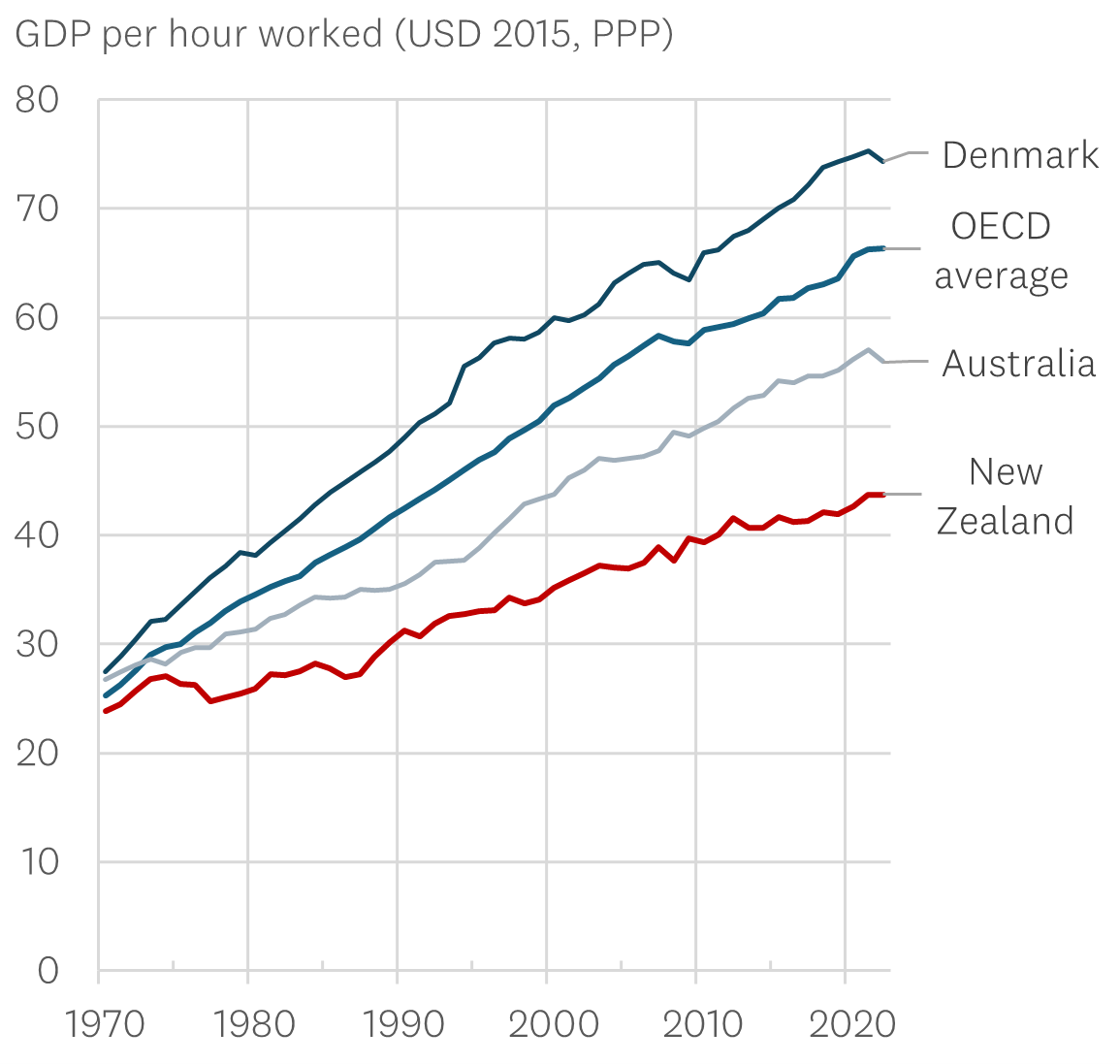
“That isn’t conclusive evidence, but it does raise important questions about whether we're making the most of our size and economic potential. Particularly given the country overall lags its peers in productivity growth.
“Cities tend to work better when they allow people to live closer to jobs, public transport and services they need. This shortens commutes, improves access to jobs, and helps businesses connect with both workers and customers. It also makes it easier to share infrastructure and ideas,” he says.
Many of the reasons for lower productivity are national issues, but Auckland Council can still make a real difference through local policy choices — particularly those that shape how Auckland grows, where people live and work, and how people and goods move around.
Planning rules that allow more homes where demand is higher are an important economic lever, not just a housing policy. Modest ongoing improvements in productivity can add up to be significant at a national level, simply because of Auckland’s size and economic weight.
Real GDP per hour worked, OECD comparison
What’s holding us back?
Blick says high house prices relative to incomes make it harder for Auckland to attract and keep skilled workers. If house prices had grown in line with incomes since 2000, today’s median would be around $680,000, not $1 million.

Gary Blick, Chief Economist at Auckland Council.
“Research shows overly restrictive land use in the past has contributed to rising house prices and reduced New Zealand’s GDP by around 0.9 to 1.8 per cent, while the Auckland Unitary Plan has started to address this.
“When house prices rise faster than incomes, people must use more of their money for a home. That leaves less available for other things, including savings for more productive investments in businesses or skills — the things that grow our economy,” he says.
“Accommodating growth at the city’s outskirts creates longer commutes, higher infrastructure costs, and congested roads. “Congestion alone is costing us $700 million a year in forgone productivity in addition to the social costs of lost personal time.
“If we want Auckland’s economy to work better, we need to get the basics right with more housing choice in high demand areas, closer to things people need, where infrastructure already exists”, says Blick.
We’ve been making some good progress…
Auckland has already seen positive changes since the Auckland Unitary Plan took effect in 2016. Its more flexible rules have enabled more choice in housing type and location. Housing supply has been better able to respond to demand, with more new homes in existing urban areas, including nearer town centres and public transport. That has been positive for affordability.
Government requirements for more homes to be near town centres and rapid transit, where demand is highest, are an opportunity to build on that progress and further lift Auckland’s long-term productivity, supporting higher wages and living standards.

“A key lever for increased productivity is ensuring Auckland’s planning rules are enabling more homes in high-demand areas where most people want to live. This gives people better access to jobs and education, and eases pressure on our roads.
“International evidence supports this approach, with studies generally reporting improved productivity from higher urban density — where homes, jobs, and services are located closer together.
“Alongside more flexible land use, using infrastructure pricing to manage demand and support growth in efficient places, and prioritising spending to deliver the most value are also crucial levers to lift Auckland’s productivity.
“A more productive economy means higher output per worker, which enables higher incomes, and in turn better public services and infrastructure — improving living standards for everyone, not just Aucklanders”, says Blick.
“And when Auckland’s economy works better, the benefits flow nationwide through improved supply chains, knowledge sharing, and higher tax revenues that support public services across New Zealand.”
Read more on Auckland's Economic Quarterly [2.03MB] by Auckland Council’s Chief Economist Unit.