


Where do Aucklanders most want to live? New research from Auckland Council’s Chief Economist Unit shows demand for housing is strongest in locations near jobs, public transport, shops, schools, and parks.
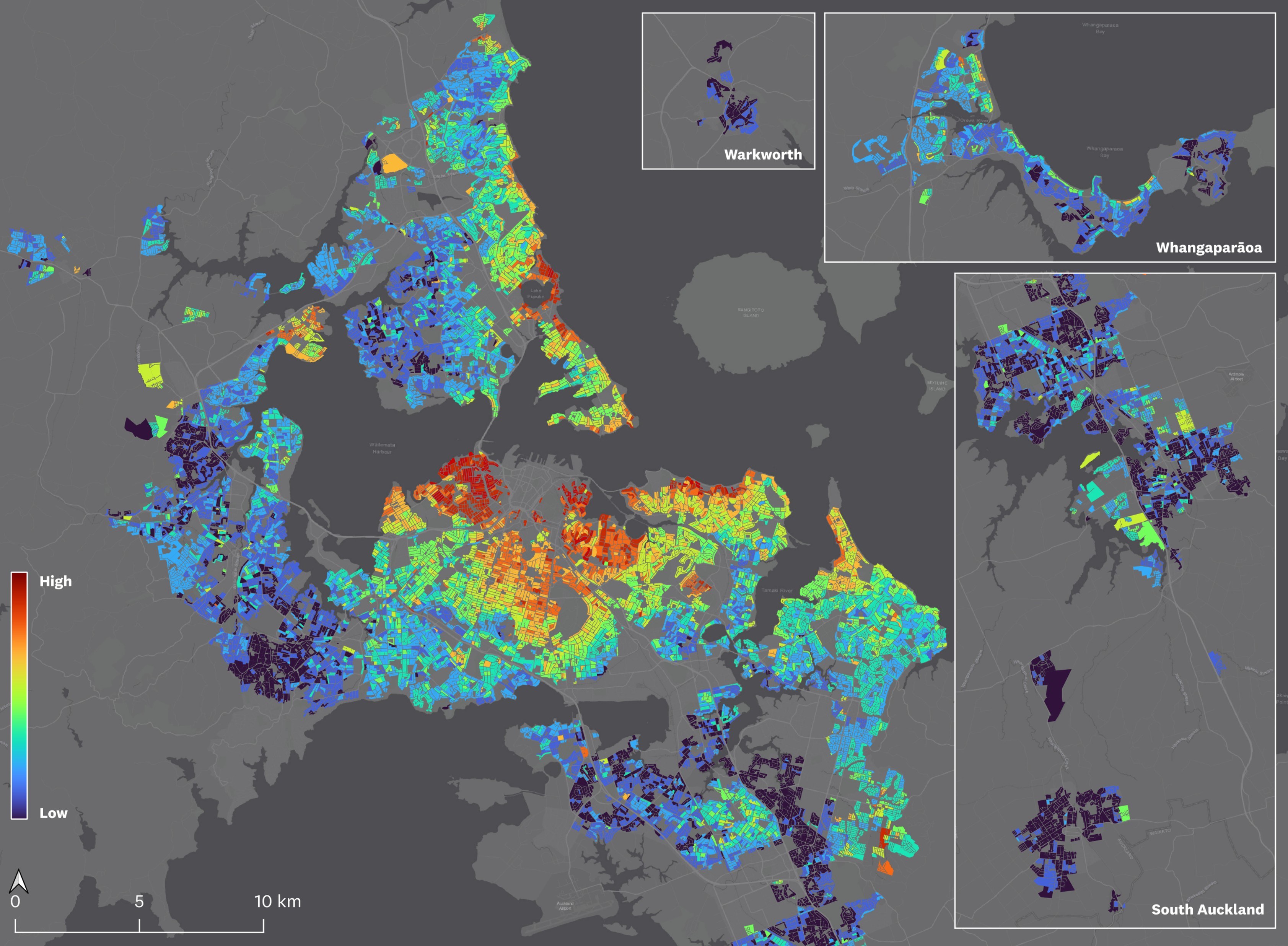
The research, based on 2024 property valuations and a new spatial demand model, estimates land values across the city to understand what drives demand for housing. Higher land values indicate where people are willing to pay more for a home’s location, reflecting a strong preference for access to jobs, services, and transport.
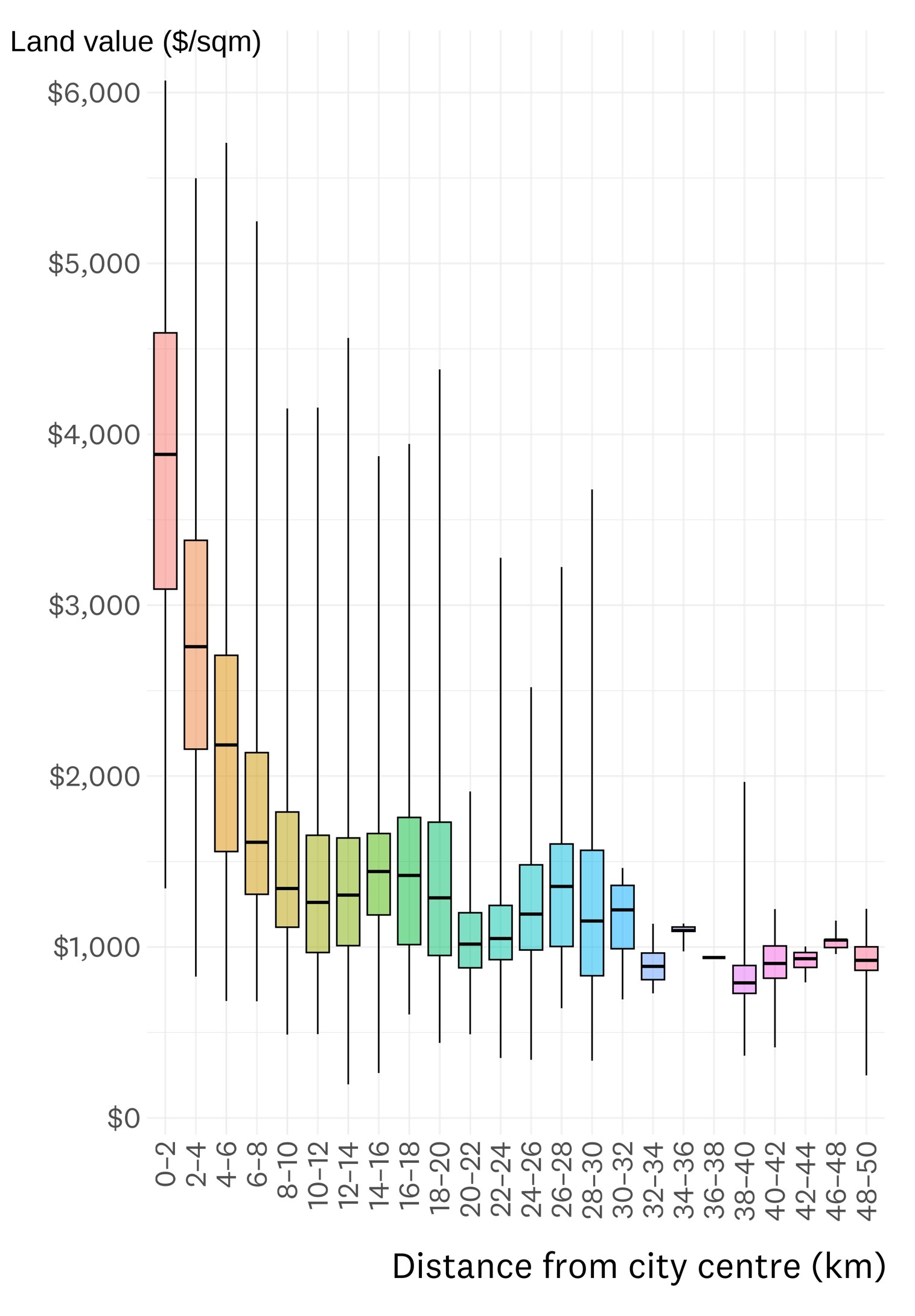
Chief Economist Gary Blick says the findings are clear: “The more central locations within Auckland tend to be in highest demand with land values generally declining as you move further out from the city centre.
“Every neighbourhood is important to the people who live there. But when we look at where demand is strongest, it’s clear many Aucklanders want to be closer to the things that make daily life easier," he says.
Central and Connected
The analysis confirms a pattern common in cities, that proximity matters. Locations nearer the city centre or well-served by transport attract higher land prices because they shorten commutes, make it easier to reach jobs, shops and services, and offer lifestyle benefits.
While Auckland has multiple suburban centres, Blick notes that in economic terms, Auckland functions as “largely monocentric”, based on the pattern of land values. This reflects the city centre’s role as the region’s primary hub for employment, being highly accessible due to strong transport connections and having services such as retail and hospitality in and around nearby suburbs.
“Although land values fall with distance from the centre, the data also shows some variation at every distance. Smaller town centres and natural amenities such as beaches or parks also influence where people want to live,” Blick says.
Fig 1: Estimated residential land values per square metre
Source: Auckland Council Chief Economist Unit
Planning Rules Influence Development Potential
Research also shows that the rules for what can be built on land significantly influences land values. Land zoned for more intensive housing—such as terraced housing or apartments—tends to gain an uplift in land value because it allows for more productive use of the land.
“Enabling sufficient housing capacity where demand is the strongest makes development more financially viable for developers,” Blick explains.
“Developers have greater confidence in buyer interest, which increases the likelihood that planned projects will actually be built. That’s critical for improving housing supply.”
These insights also help to understand the government’s directions to Auckland Council to allow building heights of 10 to 15 storeys around key Western Line train stations. Having more space for homes in the places where people can use existing transport infrastructure and services makes it easier for people to move around and access jobs and shops.
Fig 2: Land values by distance from the city centre
Source: Auckland Council Chief Economist Unit
Why It Matters
Blick says planning rule are not just about housing supply—they are a key economic lever.
“Cities work better when people can live closer to what they need. That lifts productivity by shortening commutes, improving access to jobs, helps retain skills, and provides businesses with a wider talent pool for workers and customers. This supports higher wages, and makes Auckland a more competitive, liveable city."
The Chief Economist Unit’s research shows that by better aligning planning rules with areas where demand is strongest and where infrastructure already exists, Auckland can build a more efficient and affordable urban form.
Key Findings
- Land values reveal demand for where people want to live.
- Demand for housing is strongest near jobs, transport, and services.
- Land use rules shapes development potential and how land can be used productively and flexibly.
- Development capacity enabled in high-demand areas makes it more feasible to build, offering people the choice to live near the locations, services and amenities they value the most.
Read more on the Insights Paper: “Where Aucklanders Want to Live” - by Auckland Council’s Chief Economist Unit.