


Summer in Tāmaki Makaurau means jandals, ferries, and island adventures! But while we’re out enjoying the sun, sand, and sea, a whole lot of people and a few four-legged heroes, are quietly working behind the scenes to protect the Tīkapa Moana / Hauraki Gulf from unwelcome pests.
From rodent-sniffing dogs to eagle-eyed ferry crews, here are five awesome pest-free initiatives happening in and around the Gulf and a few things you probably didn’t know about them!
1. Pest-free warranted operators – the Gulf’s frontline guardians
Did you know? Before your barge, ferry, or freight even sets sail from Auckland’s shores, there’s a team making sure it’s pest-free!
Pest-free warranted operators are the unsung heroes keeping pests like rodents, insects, and weed seeds, off our islands. Every clean load, clear message, and careful inspection helps protect the Gulf’s precious wildlife.
Just look at these legends in action:
- Sealink recently stopped a digger from travelling to Waiheke after finding it covered in mud and debris, a simple decision that could have saved an island from invasive seeds and insects
- Fullers acted fast when skinks were spotted on board, containing the situation before it became an island incursion
- Explore Group shines with top-notch biosecurity messaging for passengers, so they know what to do to keep their island visit pest free
- and Belaire Ferries; their biosecurity manual is the gold standard, making sure staff are always on the ball.
All these operators prove one thing: biosecurity for life means biosecurity is everyone’s responsibility.
2. Pest-free partners – businesses doing their bit
Did you know? Local landscapers, marinas, and boat clubs are joining the fight too.
Through the pest-free partner programme, businesses big and small are taking voluntary steps to keep the Gulf safe. It’s all about building a community of care, where simple actions like checking gear for soil or seeds, make a huge difference.
Early adopters like Central Landscape Supplies Waiheke and Wyatts Landscaping in Warkworth are leading the way, showing how everyday business can help protect extraordinary places.
When everyone chips in, the Gulf wins!
3.The biosecurity dog team – sniffing out trouble
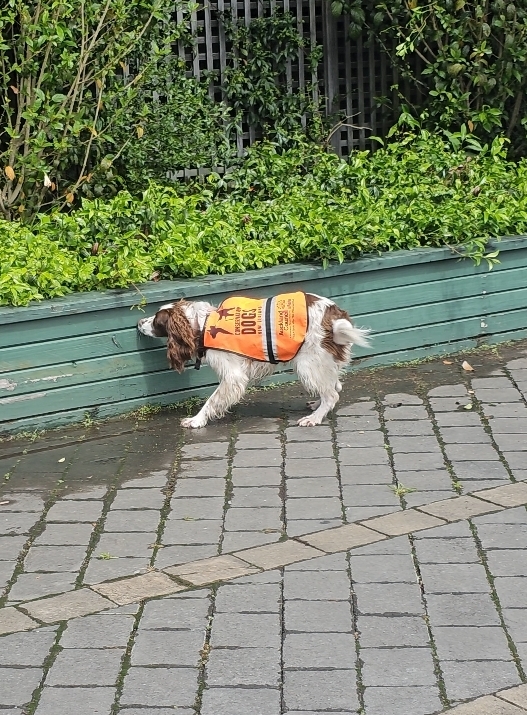
Did you know? Auckland Council has its very own squad of sniffer dogs on patrol and they’re very good at it.
Meet the biosecurity dog team, a group of trained conservation dogs and their handlers’ checking boats, ferries, and vehicles for risky goods. Whether it’s coconut fibre, beehives, or building materials, nothing gets past their noses!
This year, the team welcomed Tilly, an energetic fox terrier especially bred for the programme who is being trained to detect rodents. She’s on track to become a fully certified rodent detection dog but not overnight. She’s working hard to be the best!
Meanwhile, the ‘old hands’ are levelling up too! Marty is learning to sniff out Argentine ants, an invasive pest that threatens gulf islands. Once certified, Marty will be a multi-species detection machine with skills spanning rodents, kauri dieback, and two species of invasive ants.
Rosie and Ronnie are also hot dogs on the trail of pests; they’re so smart we’ve been sharing their skills with colleagues outside the region! These missions give both dogs and handlers valuable experience working in new environments all of which strengthens Auckland’s ability to respond to incursions back home.
And now? The crew is gearing up for a busy summer. With car sailings ramping up to Great Barrier, Kawau, Rakino and Waiheke, plus better weather for island surveillance, the dog team will be out in force checking for pests that might swim, scuttle, or stow away to our precious islands.
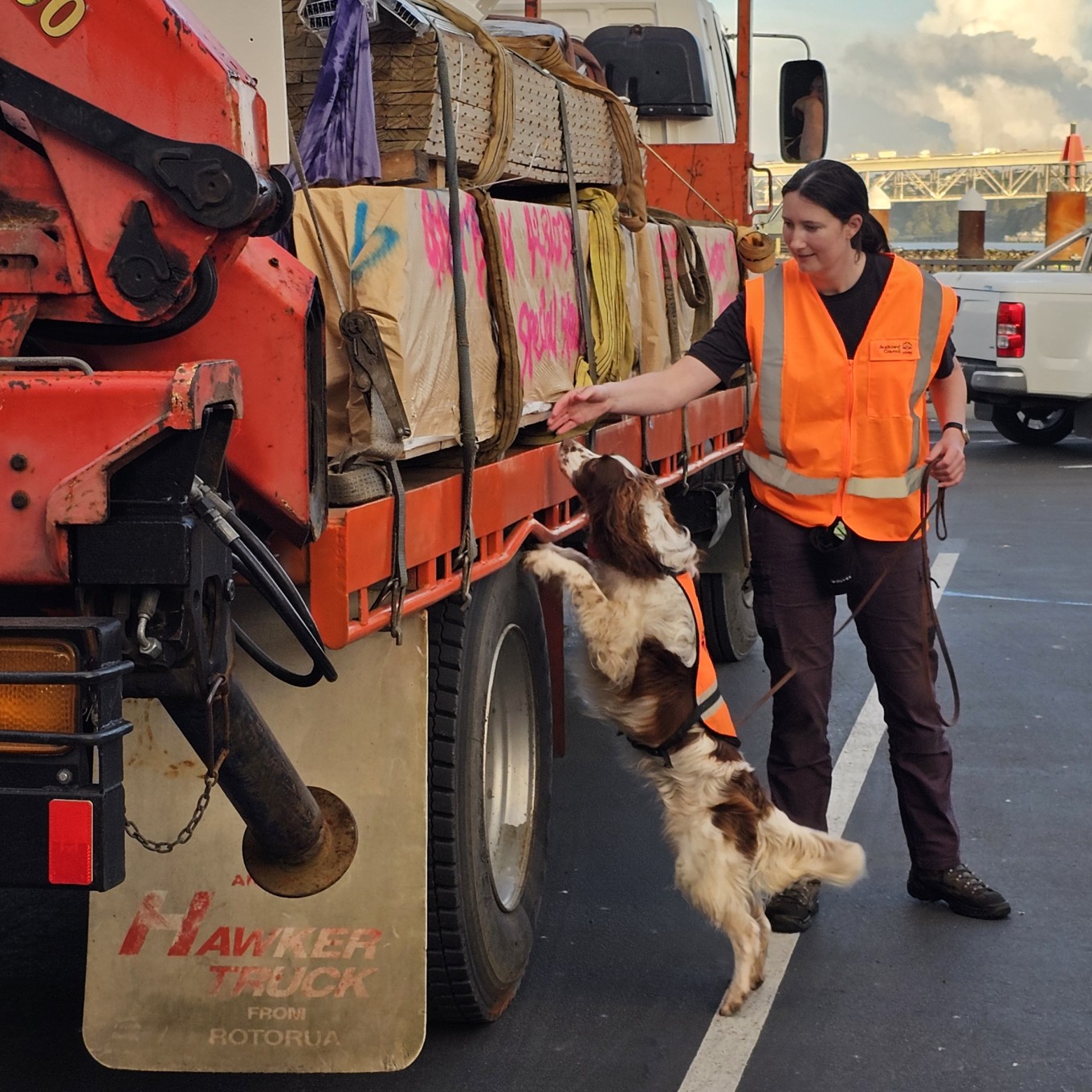
Marty the dog checking there is no pests on a truck bound for the Hauraki Gulf Islands.
Keep an eye out in the new year too; the dogs will soon have their own Auckland Council biosecurity dog page, where you can meet the whole team online.
4. Keeping it clean beneath the waves; how the marine biosecurity team is protecting our moana

Exotic caulerpa can snag on anchors and gear. Photo credit: Louise Clarke, Patukeha.
Did you know? There’s an underwater invader threatening our seabed and it’s called exotic caulerpa.
This fast-growing seaweed can smother the seafloor, pushing out marine life, and jeopardising fishing, boating, and cultural activities. It’s already been found around Aotea, Kawau, Rakino, and Waiheke.
The Auckland Council Marine Biosecurity team is working hard to stop its spread and they’ve just teamed up with Biosecurity New Zealand to install brand-new exotic caulerpa signs at 50 boat ramps across the region. The message is simple: check your anchor chain, fishing and dive gear; if you find it, remove it, bag it and bin it onshore!
There are also new rules about where you can anchor and fish in the Gulf – so it pays to check.
Keep an eye out for the new signs at your local ramp this summer and do your bit to stop this tricky seaweed from spreading. Boaties can also:
- check anchors and equipment before leaving infested areas
- avoid anchoring where exotic caulerpa is known
- find out the new rules for anchoring and fishing
- follow Control Area Notice (CAN) rules.
Every careful check helps protect our moana.
5. Big island projects making big waves
Did you know? Two incredible island projects are reshaping the future of the Gulf:
Tū Mai Taonga on Aotea / Great Barrier Island – a bold partnership between Ngāti Rehua Ngātiwai ki Aotea and Auckland Council to eradicate feral cats and rats. The project uses high-tech mapping, local conservation workers, and traditional knowledge to restore the island’s ecosystem.
Te Korowai o Waiheke – aiming to make Waiheke the world’s first predator-free urban island by removing stoats and rats, this project brings together passionate locals and community groups all working towards one goal: a thriving, predator-free paradise.
Together, we’ve got this
So, next time you’re boarding a ferry, dropping anchor, or heading out to explore, spare a thought for the hundreds of people and paws, working tirelessly to keep the Hauraki Gulf pest-free.
Every clean boot, every checked bag, and every vigilant operator helps keep our islands buzzing, chirping, and flourishing for generations to come.
Biosecurity for life — because paradise is worth protecting.