


Auckland’s future growth is forecast to be more concentrated and better connected to existing services and transport under Plan Change 120, a new housing supply model from the council’s Chief Economist Unit shows.
Over the next 10 years, there is forecast to be a larger share of homes near services and infrastructure, in locations with better access to jobs, shops and transport. This could make better use of existing infrastructure and support higher productivity across Auckland.
More homes in places that matter
Plan Change 120 replaces the previous planning rules from central government, called Plan Change 78, which would have enabled widespread three-storey housing across most of Auckland’s urban area.
While both plans allow for significant housing capacity, Chief Economist Gary Blick says the location of that growth is where the biggest difference lies.
“Our forecast shows that Plan Change 120 would concentrate more housing growth near centres, rapid transit and key transport corridors, these are places where people want to live and where development tends to be more commercially viable,” says Blick.
“Location matters. Where we allow new housing is just as important, it matters for people’s daily life, affordability and the overall performance of Auckland’s economy.”
Using new modelling based on real-world market behaviour since the Unitary Plan was introduced in 2016, the forecast has found that 35 per cent of new homes would be within walkable distances of town centres and rapid transit stops, up from 26 per cent under the former Plan Change 78.
In addition, 17 per cent of new homes would be within 7km of the city centre (up from 10 per cent).
New homes would be more concentrated in areas where infrastructure already exists, reducing pressure for network extensions.
Many of these locations also have relatively high land values, indicating strong demand for housing and access to services, jobs, and transport.
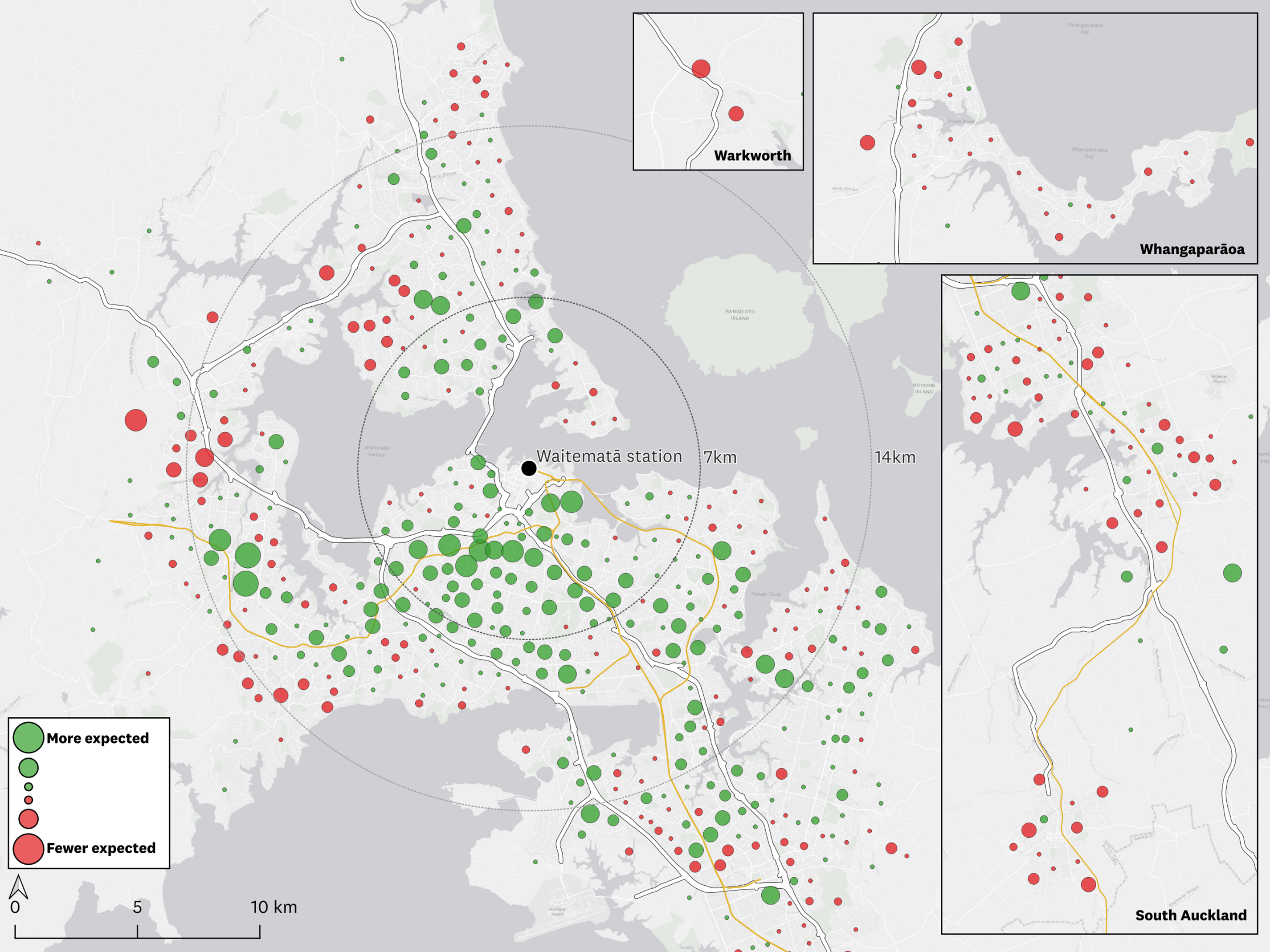
Fig 1: Forecast change in new homes over 10 years under Plan Change 120 relative to Plan Change 78. Source: Auckland Council Chief Economist Unit.
The possibility of more new homes
“The forecast suggests that housing supply could be 6 to 20 per cent higher than under the old Plan Change 78 rules, especially if higher yields of homes per site can bring down average development costs. That means developers could offer more competitive prices, meet higher demand, and still make a profit,” says Blick.
“This could imply around 22,000 potential new homes a year under Plan Change 120 over the next decade.
“That’s a big jump from the average of 14,000 homes per year under the current Unitary Plan, but that is sensitive to future interest rates and population growth.
“But it is still a forecast, and we have to acknowledge some uncertainty. Data shows the Unitary Plan has already allowed a lot more housing, so the gains under Plan Change 120 could be smaller.
"On the other hand, ongoing affordability pressures indicate demand for housing remains high, and that is strong motivation for developers to build more homes in the right places,” he says.
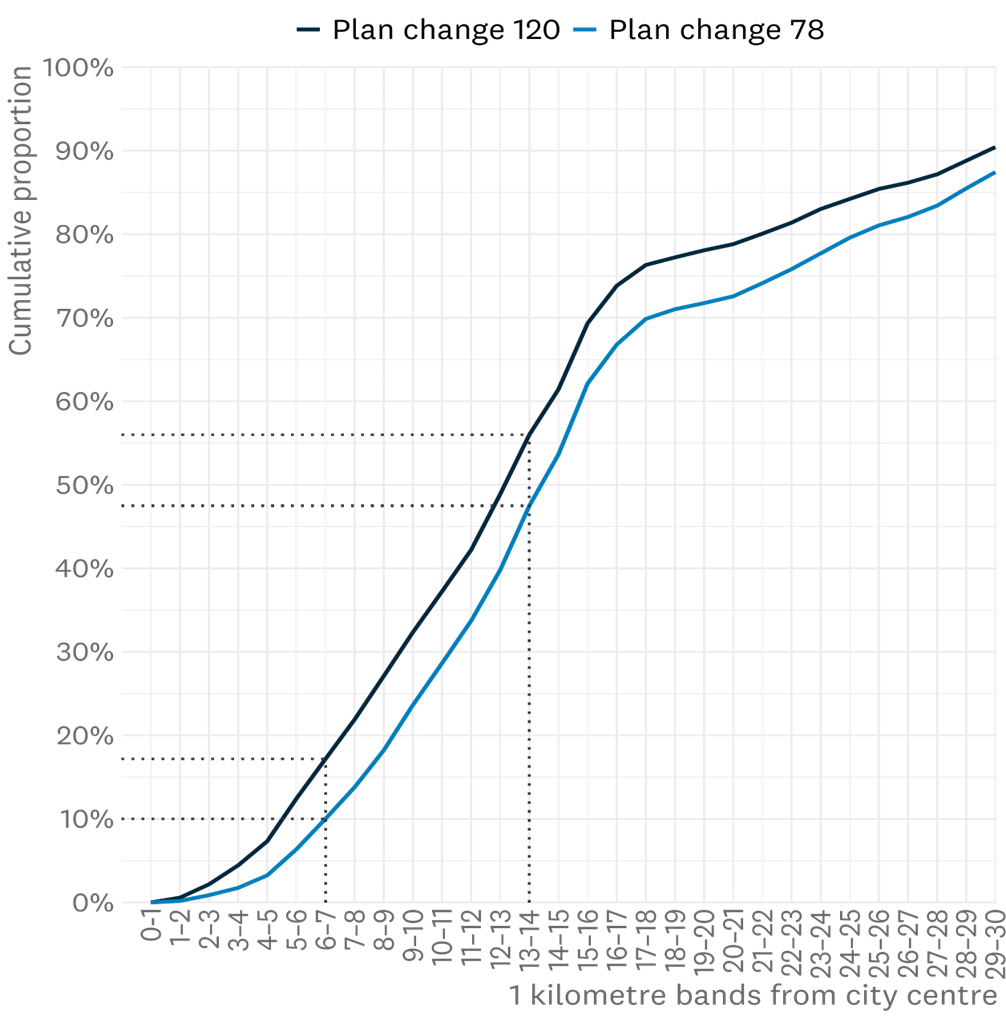
Fig 2: Forecast new homes, by distance from city centre. Source: Auckland Council Chief Economist Unit.
Unlocking the benefits of better housing locations
The forecast shows that Plan Change 120 will deliver important benefits, compared to the old planning rules.
- More choice for people to live closer to services, jobs, and transport - areas where demand is strongest.
- More efficient use of existing infrastructure, including the $5.5 billion City Rail Link, letting more people live within easy reach of high-frequency transport.
- More housing in accessible locations supports shorter commutes, improved job matching and attracting skilled workers. These are all factors associated with higher productivity.
“Cities function better when people can live closer to what they need. That is good for productivity and can make daily life easier for people,” says Blick.
As with any change, there are trade-offs. Concentrated growth near centres and transport may mean fewer properties are affected by the widespread three storey housing of Plan Change 78.
However, there could be larger developments in some specific areas that may impact neighbouring properties and gradual changes to local character in some areas. This depends on the scale, design, and location of future development.
“The forecast helps us understand the trade-offs from the proposed changes to planning rules, with the final changes shaping Auckland’s urban form for years to come,” says Blick.
Public submissions on Plan Change 120 are open until 19 December 2025. Visit akhaveyoursay.nz to learn more and make your voice heard.
Read the full Insights Paper: More room to grow in good locations by Auckland Council’s Chief Economist Unit.