


- Shed surprise: a Kawau resident finds North Island brown kiwi dad incubating egg in a backyard garden shed
- Kiwi dads do the hard yards: the devoted male who sat tight for nearly 55 days of 80 to no avail
- Warning signs for Kawau kiwi: A 2025 survey found 56 birds but no chicks, highlighting low breeding success and genetic challenges
A Kawau Island resident recently discovered they had an unexpected, feathered houseguest and he wasn’t paying rent.
Tucked into the corner of a humble garden shed, a determined North Island brown kiwi had dragged together an eclectic collection of plastic, paper and whatever else he could shuffle into place to fashion a cosy nursery. The reason? An egg, carefully laid by mum and now entrusted, as is kiwi tradition, to dad.
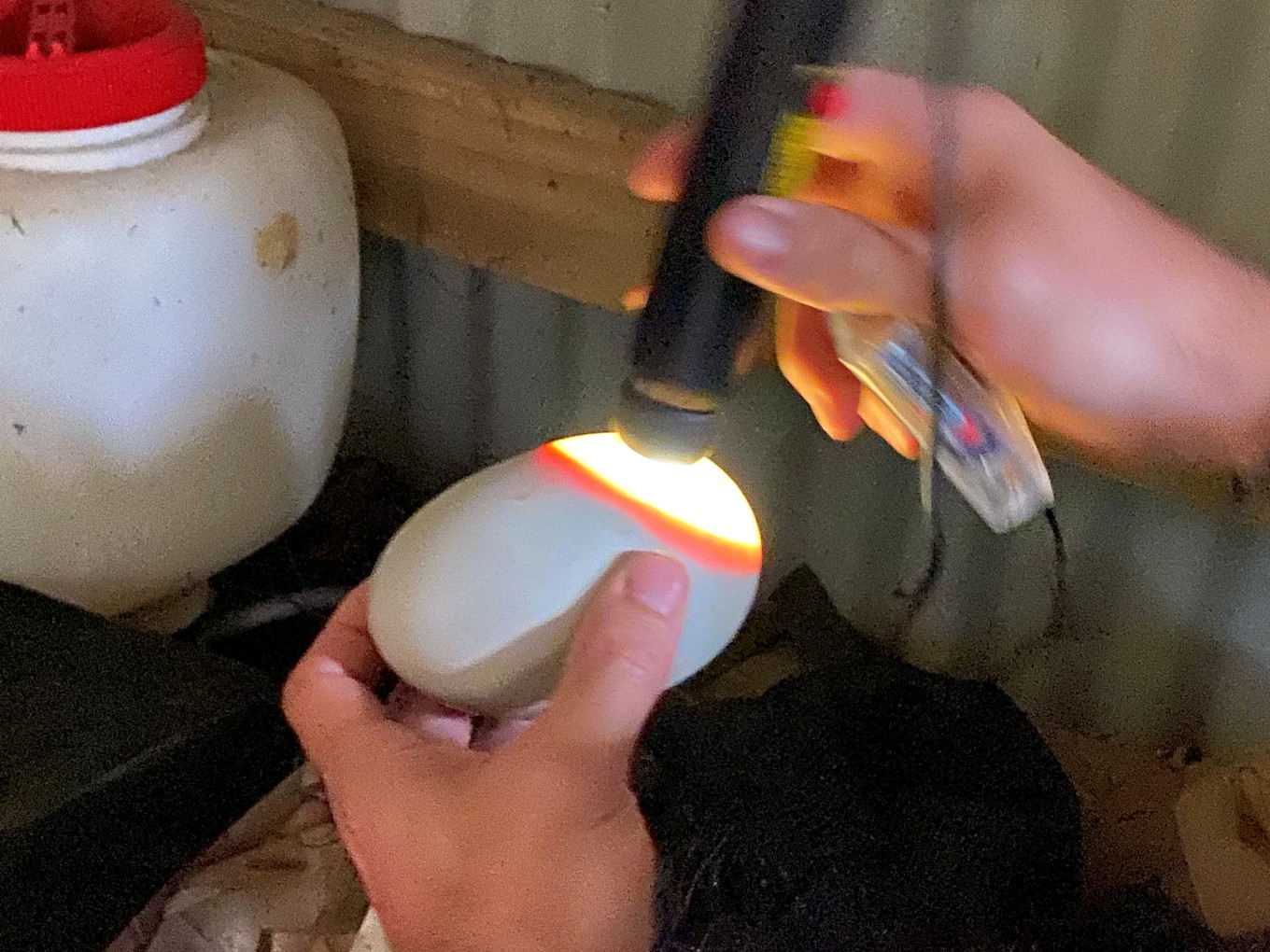
Dr Juan Cornejo, Auckland Zoo assessing viability of egg.
In the world of kiwi, the boys do the babysitting. Once the egg is laid, the male takes over incubation duties, sitting patiently for around 75–80 days; one of the longest incubation periods of any bird. For weeks, this devoted Kawau Island papa was spotted slipping out under cover of darkness to feed, then quietly returning to resume his devoted vigil.
Even a curious weka popped by to inspect the unusual setup, poking around to see what the shed-dwelling neighbour was up to.
When concerns were raised about the egg’s progress, a small team including Dr Juan Cornejo from Auckland Zoo and Lisa Tolich, Auckland Council’s Principal Specialist - Natural Environment Operations travelled to the island to assess the situation. The adult male was away at the time, but sadly the egg was cold and no longer viable. Candling confirmed the egg had developed to around 55 days, not far off maturity, but there were no visible blood vessels feeding it.
“It’s always disappointing when an egg doesn’t make it, especially when dad has put in such a monumental effort,” said Lisa Tolich.
“But every nesting attempt tells us something important about how our kiwi are doing and reminds us of just how resilient and determined our kiwi are.”
A comprehensive survey undertaken between January and March 2025 has provided the clearest picture yet of the Kawau kiwi population. Across three trips, trained kiwi dogs detected 56 birds, with 51 adults handled, many in just poor to moderate body condition. No chicks or juveniles were found.
“That absence of young birds suggests breeding success has been low in recent years,” said Tolich.
“Dry conditions, habitat degradation and heavy browsing of undergrowth by wallabies are likely reducing food availability and putting pressure on adults.”
Genetic testing also shows Kawau kiwi have very low genetic diversity, tracing back to a small founding population introduced in the 1860s. While unique traits remain, long-term resilience will rely on careful habitat restoration, wallaby control and managed genetic exchange.
While this chapter has a bittersweet ending, there is a bright side; the cheeky shed-squatter has since been picked up on camera, alive and well and hopefully before long, there will be another chance for him to egg sit with a happier outcome.
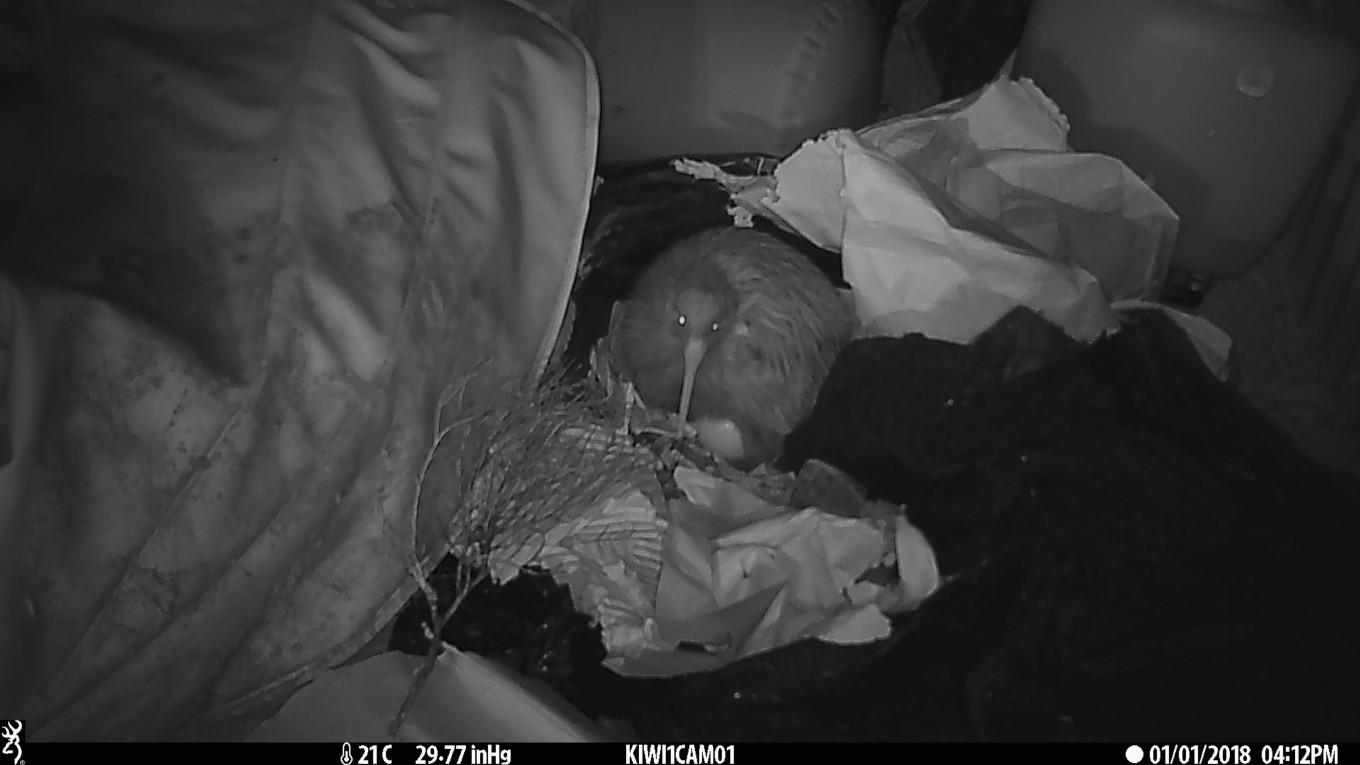
Trail cam: North Island brown kiwi squatting in shed on Kawau Island.
For this special Kawau kiwi population, this male, as he returns to his nesting duties, may yet play an important role in seasons to come.
What to do if you find a kiwi nesting on your property
- Do not disturb! – if the bird is sitting on eggs, don’t move the nest, the egg or the bird
- Keep it safe – make sure cats and dogs can’t disturb it
- Consider having a backyard trap
- Report it – let the Department of Conservation know. They may even want to monitor the bird – 0800 DOC HOT (0800 362 468) or
- Don’t try to handle, feed (including leaving out food) or move the bird.
Visit the Save Kiwi website for more information. This initiative was undertaken between January and March 2025 on behalf of Auckland Council.