


The world’s fuel shock is making life challenging at the pump.
Conflict in the Middle East and this fuel price pressure, whilst difficult on many fronts, are reinforcing the value of the City Rail Link (CRL) as the city gets ready for day one of the new network in the second half of 2026.
Public transport is already one of the most affordable ways to travel. Up to 400,000 weekday trips are being recorded at the moment, the highest level since COVID, and there is capacity for more. CRL is set to make public transport options even more attractive.
Auckland Transport has a fully electric train fleet shielding it from fuel price rises and any potential fuel restrictions. For the last few years it’s been gradually adding more trains to be able to carry more people when CRL opens later this year.
When the South City (S-E), East West (E-W) and Onehunga West (O-W) lines are up and running and ticketing gates first open at the city’s new CRL stations, many Aucklanders will start to experience the benefits of the new network every day.
Some big-picture benefits are anticipated too – things like improved sustainability, productivity, liveability and walkability to stations.
Big-picture benefits
Commentators say CRL will lift Auckland as an international contender for talent, investment capital, tourism revenue and big events.
Councillor Andy Baker who is Chair of Auckland Council’s Transport and Infrastructure Delivery Committee says the City Rail Link network itself, the upgrade of neighbourhoods around new stations, and the higher frequency timetable will all improve how the city moves, grows and competes.
“When the new stations open, I think Aucklanders will be proud of what they see. We have built stunning long-term assets for the city. Our city centre has been regenerated, and we’re ready. I’m excited that Aucklanders will soon be able to enjoy it.
“It will open up easy and efficient travel in and around the city for those further from the city centre, while connecting the likes of Pukekohe and Franklin with our urban population. Everywhere will benefit,” says Councillor Baker.
Auckland Council Director of Resilience and Infrastructure Barry Potter says CRL is the largest, most complex transport project undertaken in New Zealand for decades.
“Just as Waitematā Station has driven quality development in downtown, the CRL’s new stations will also drive investment. It will continue to have a positive catalyst effect.
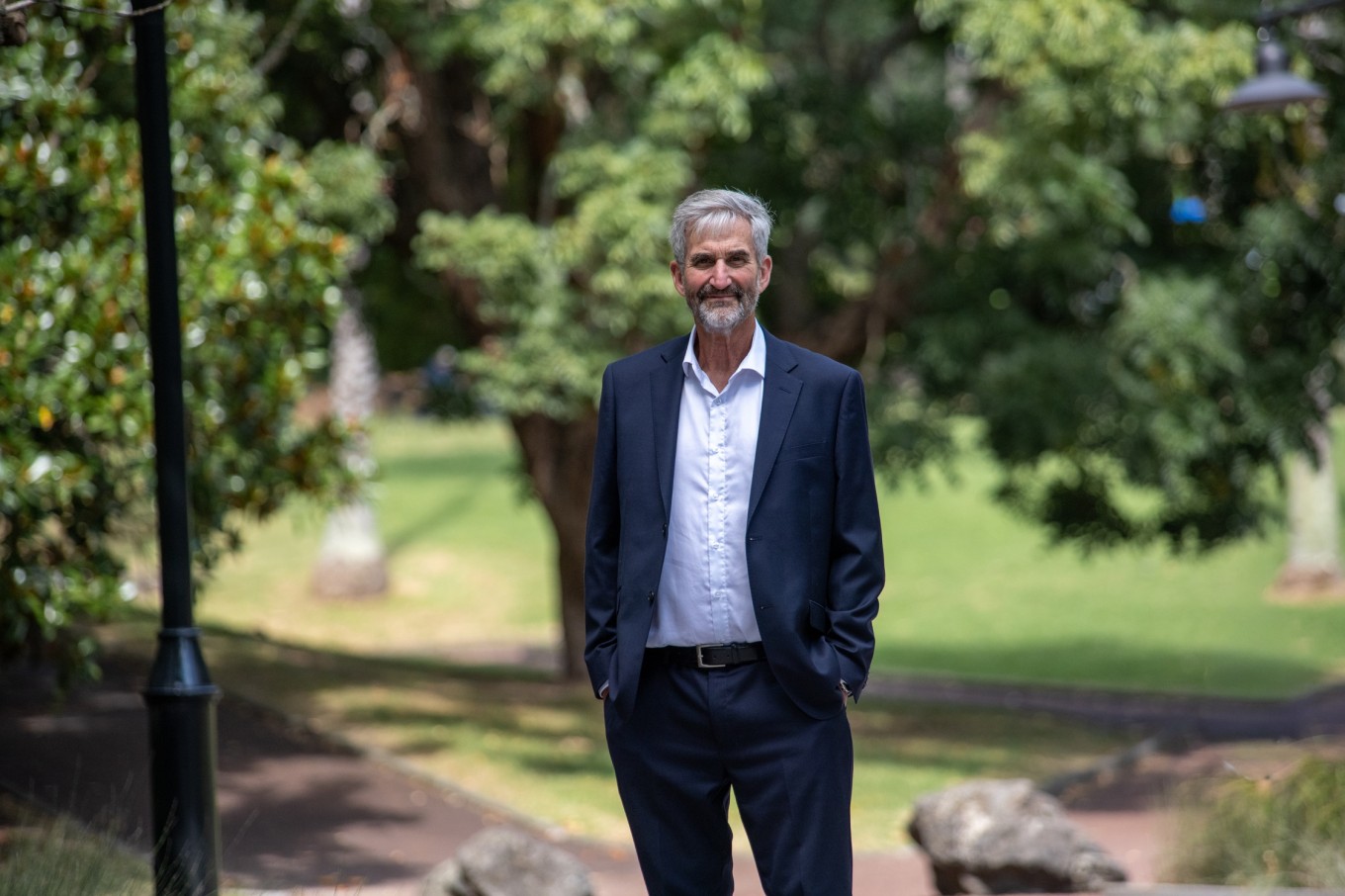
Auckland Council’s Barry Potter in Myers Park which was upgraded as part of Te Waihorotiu Station neighbourhood.
“And the more people use the rail network and the more vehicles come off the roads, the more sustainable Auckland becomes,” says Potter.
Looking at the economic advantages of the new transport network, Auckland Council Chief Economist Gary Blick says improved connectivity between people and jobs enabled by CRL will drive urban productivity.
“A more productive Auckland is not only more competitive in attracting people, skills, and investment; ultimately it’s a more liveable place for everyone,” he says.
Reflecting on the upgraded streets and spaces the Auckland Council group has delivered around the new stations to welcome the surge in passengers, Auckland Council Priority Location Director for the city centre, Simon Oddie, says people will see that CRL is much more than a transport project.
“It’s a city-shaping investment. Our new station neighbourhoods have created places that connect people seamlessly to jobs, learning, culture and daily life, while supporting a more walkable, resilient and low-carbon city centre,” he says.
Renowned French urbanist Alain Bertaud said central Auckland's public spaces are among the best he's seen in the world, while visiting Auckland last week. (Source: BusinessDesk)
For more big-picture benefits, read more on OurAuckland.
And for more on the newly completed CRL station neighbourhoods read about the Waitematā Station neighbourhood and Karanga-a-Hape Station neighbourhood.
Everyday benefits
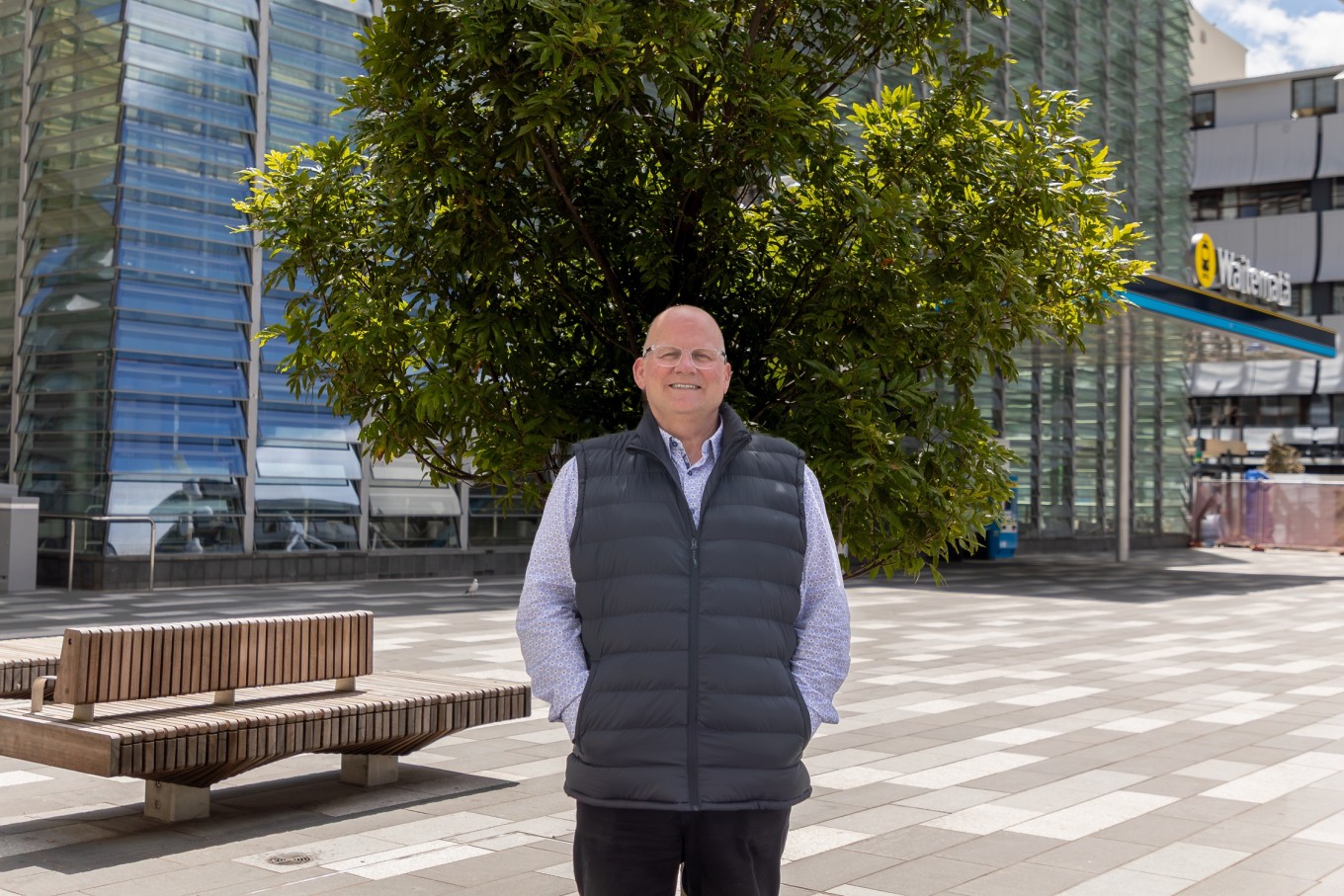
Councillor Andy Baker in Waitematā Station Plaza.
For a full outline of the new train lines, a City Rail Link information brochure is available in eight languages on the Auckland Transport website.
Once the CRL-enabled timetable is operational, the city’s twin underground 3.45km rail tunnels will make the rail network and bus connections more efficient - reducing travel times, improving access to the city centre and unlocking direct journeys across Auckland.
What does that mean in the north, south, east and west? This is a snapshot:
South
- People who live in Papakura or near any station on the South City (S-C) line will have direct rail connections into the city with two more stations in central Auckland – Te Waihorotiu Station and Karanga-a-Hape Station. This opens up direct access to jobs, universities, restaurants, shops and theatres in the city centre.
- From Te Waihorotiu Station, with entrances / exits at Wellesley and Victoria Streets, there will be frequent buses to the North Shore; and from Waitematā Station, buses and ferries to the North Shore are a short walk from the platforms.
- In 2026, two new stations will open on the S-C line between Papakura and Pukekohe – Drury Station and Paerātā Station - with a third, Ngākōroa Station, to be built in Drury West. The stations will all have a bus interchange right outside. 65,000 people are predicted to live in Drury by 2050. That’s more than the population of Rotorua.
- Onehunga residents will have the Onehunga West (O-W) line on their doorstep once CRL is operational, taking them further west as far as Henderson off peak - or to the city centre via a quick transfer at Newmarket Station.
North
- The Northern Busway is an example of good investment in public transport infrastructure. The busway has proven to be easy to use, quick, cost-effective, frequent – and is well-used.
- People arriving in downtown – at the Albert Street bus interchange - on the NX1 or on a ferry will simply walk through Te Komititanga – downtown’s central square - and step on a train at Waitematā Station.
- Other North Shore buses – such as the NX2 –will arrive at the Wellesley Street bus interchange which sits at the heart of the CRL rail system, with quick and easy transfers to the rail network via Te Waihorotiu Station.
West
- From day one of CRL the train journey from Henderson to the city centre will be quicker. The new CRL underground tunnels eliminate the need to go via Newmarket, creating a more direct trip, significantly reducing travel times.
- The journey will take just 35 minutes from Henderson Station to Te Waihorotiu Station – getting to and from work in the city centre or into the midtown arts quarter in the evenings on one single train via the East West (E-W) line.
- Operating until around 11pm seven days a week (every 30 minutes after 8pm), and a little later on Friday and Saturday nights, people will have the freedom to come and see a show in the city centre by train, without needing to think about parking, taxis or train changes.
East
- Train trips from Glen Innes or any eastern station to the city centre are already fast because that section of Auckland’s rail system was built in the 1930s, so it’s flatter.
- Before CRL, people would have taken multiple trains from the east to the west or south. With CRL, people will travel from stations in the east to Eden Park, Sylvia Park or Manukau, for example, on a single train using the E-W line.
*These are peak travel estimates using public transport.
More information on the CRL transit map can be found in this document [695KBs].