


Auckland Council-supported conservation efforts in the Hūnua Ranges have come full circle, with native kōkako set to help rescue the struggling population in Te Tai Tokerau.
Nine kōkako from the thriving Hūnua population have been translocated to Mataraua, near Waipoua Forest, in a bid to prevent local extinction and strengthen a declining northern population. A further 11 are expected to be relocated by 23 August when the projects ends.
From the brink to a stronghold
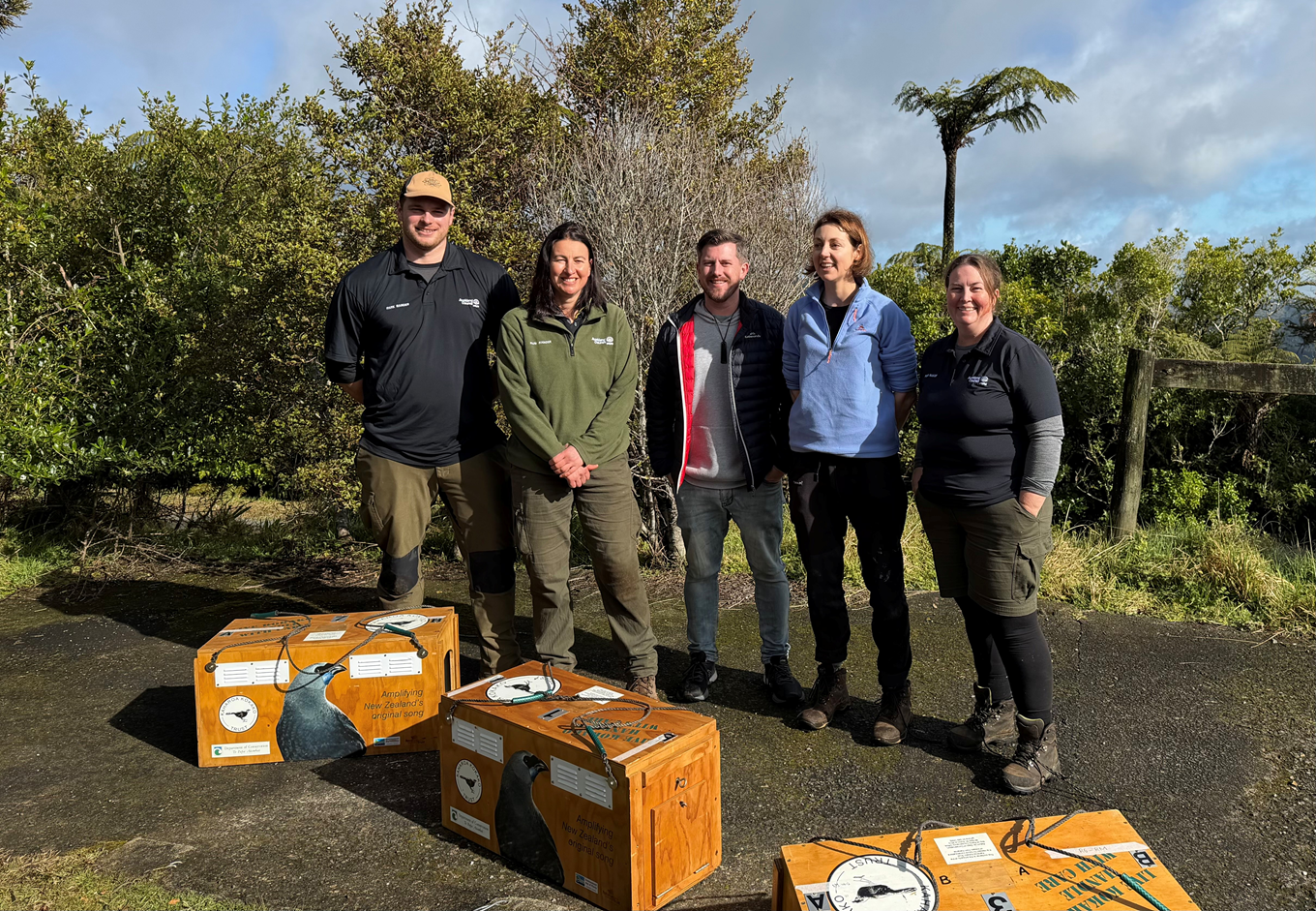
Auckland Council project team with first tranche of birds for translocation. From left to right: Ranger James Myers, Project Coordinator Ruth Cordey, Cr Hills, Amanda Rogers, Principal Ranger Miranda Bennett
The Hūnua Ranges host one of New Zealand’s most remarkable conservation comeback stories. In the mid-1990s, just one female and a small group of ageing males remained, putting the population at serious risk.
Today, the forest is home to hundreds of kōkako, with strong annual breeding success. The turnaround has been driven by sustained pest control, translocations and decades of mahi by Auckland Council, mana whenua (Ngāti Tamaoho, Ngāti Pāoa, Ngāti Tamaterā, Ngāi Tai ki Tāmaki and Ngāti Whanaunga), the Department of Conservation and committed volunteers.
Now, that success is being shared with other regions.
Urgent need in the north
Kōkako populations in Northland’s forests, including Waima, Mataraua and Puketi, have declined sharply in recent years. In some areas, only a handful of birds remain, with very few females, a critical factor for breeding success.
Experts say a mix of pressures is behind the decline, including predators, reduced food availability during drought, and limited genetic diversity. While pest control efforts are being strengthened, time is critical to prevent further losses.
A proven conservation tool
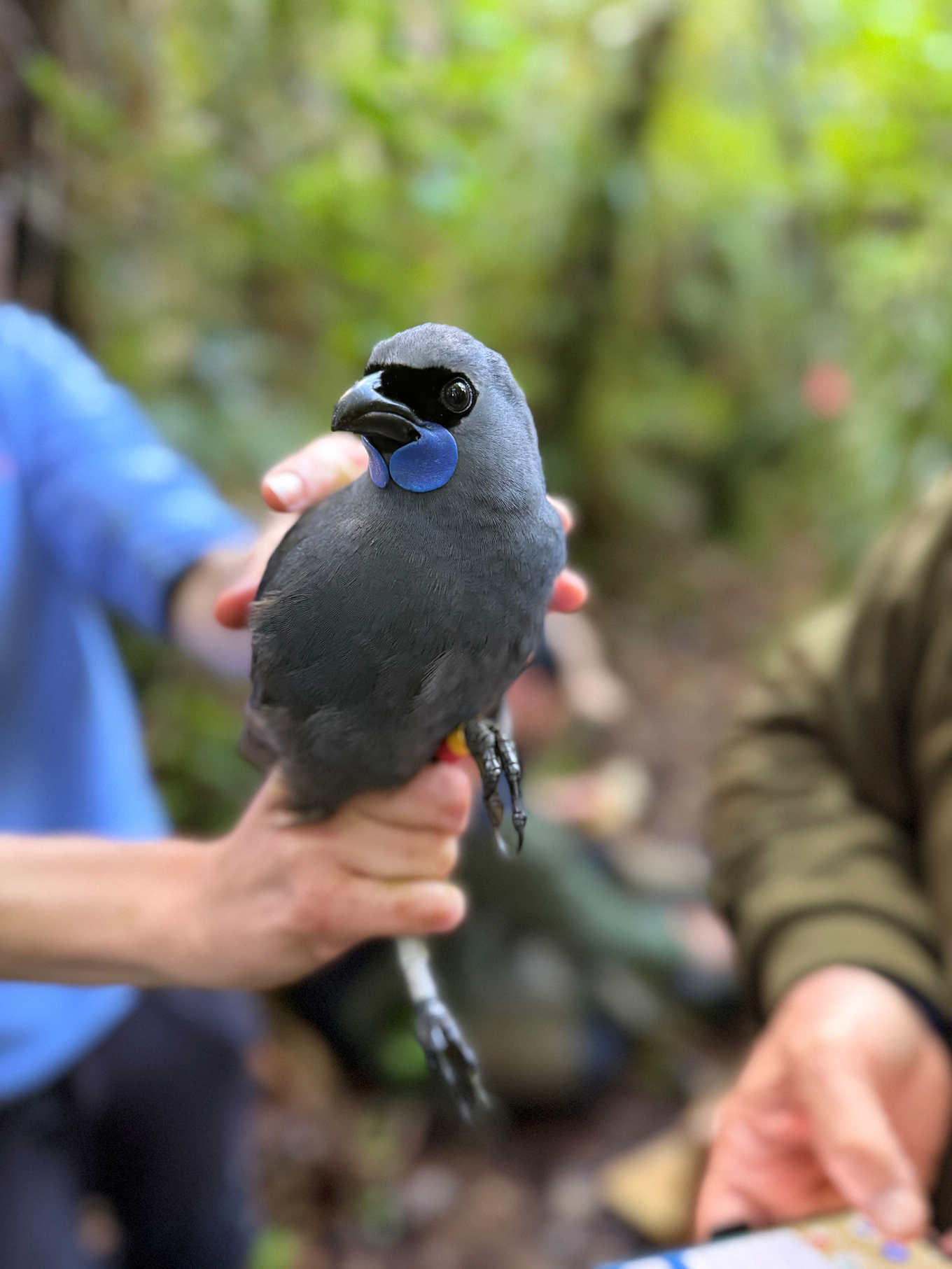
Hūnua kōkako preparing for journey to new home in Waipoua Forest.
Translocation, moving birds to boost vulnerable populations, has been key to kōkako recovery nationwide. In fact, many of today’s populations exist due to similar efforts in the past, including the original recovery of the Hūnua population.
The Hūnua birds are considered ideal candidates: the population is large, healthy and geographically close to Northland, helping minimise stress during transfer.
Auckland Council Project Lead Miranda Bennett says the move represents a significant milestone.
“This is a real full-circle moment. The Hūnua population exists today because other regions once shared their birds with us,” she says.
“To now be in a position to return that support and help prevent local extinction in Northland is incredibly special.”
A taonga species
Kōkako are treasured taonga species, and Northland populations are especially important. Their geographic isolation means they may hold unique genetic traits, valuable for the species’ long-term survival.
They are also known for their distinctive regional songs, meaning their loss would be felt both ecologically and culturally.
Local iwi are closely involved in the translocation, welcoming the opportunity to restore balance in their ngahere and continue their role as kaitiaki.
Aucklanders making a difference
Auckland Council’s investment in conservation, including through the Natural Environment Targeted Rate, has helped rebuild the Hūnua population into one of the strongest in the country.
Councillor Richard Hills says Aucklanders can be proud of what has been achieved.
“This is what conservation is all about, working together over the long term to protect our native wildlife,” he says.
“Being able to support other regions shows the real impact of that investment.”
With strong pest control measures now in place in Northland, conservation partners are optimistic the conditions are right for kōkako to recover once again.
For those who have worked to restore the species in Hūnua, this next step is both urgent and hopeful, helping ensure the distinctive call of the kōkako continues to echo through forests across New Zealand for generations to come.