Auckland Council has secured legal protection for 700 more hectares of regional parkland in Tāmaki Makaurau.
Featuring a range of important natural, cultural and recreational values, the land now protected by an Order in Council includes a significant botanical property gifted in 2025 and additional landscapes for nine regional parks –Te Ārai, Mahurangi, Te Oneroa o Kahu / Long Bay and Te Mūri to name a few.
These newly protected areas sit alongside 37,000 hectares already recognised as nationally significant and safeguarded by the Local Government Act. Another 8,000 hectares across the network is protected through separate legislation, like the Reserves Act 1977.
Councillor Julie Fairey, chair of the council’s Community Committee, says while an Order in Council doesn’t change the way regional parks are managed, it’s a significant milestone that provides another layer of certainty for Aucklanders today and into the future.
“This legal step ensures Auckland’s entire 45,000-hectare network of regional parkland is protected, along with the ability for people to access, enjoy and benefit from these iconic landscapes for many years to come,” Cr Fairey says.
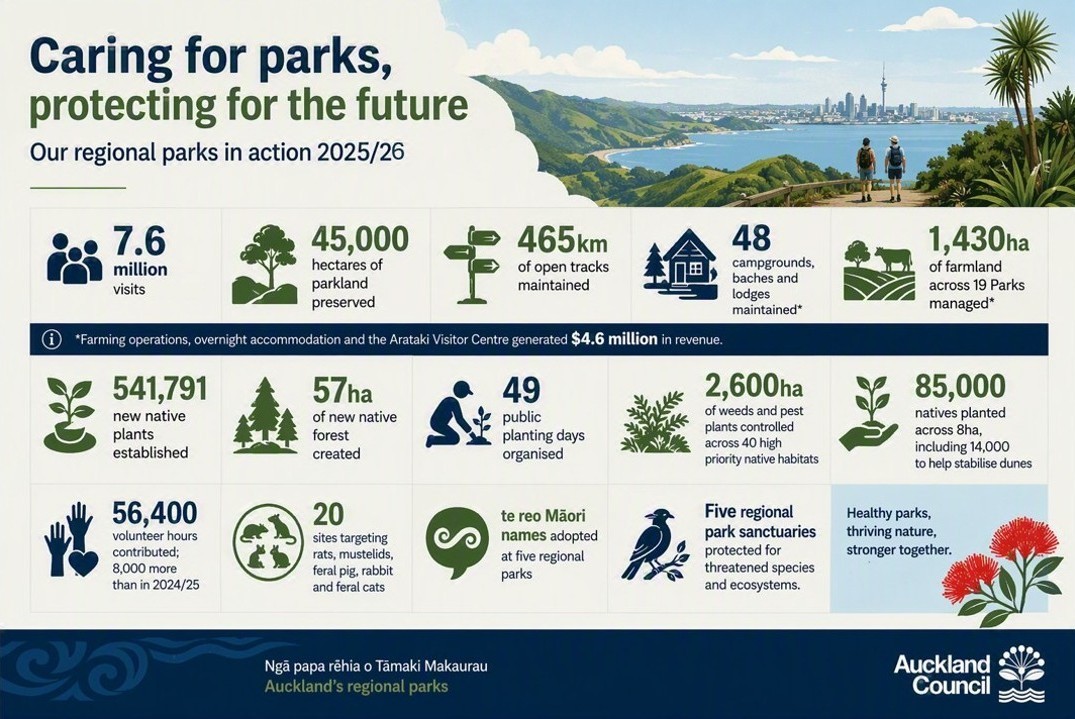
Close to eight million visitors have benefitted from the council’s investment in regional parks over the past year, finding new tracks to explore, more endangered wildlife encounters and improved visitor facilities across the network.
Cr Fairey says other major milestones include half a million more native plants going into regional parks and 57 hectares of new ngahere (native forest) created – all of which will make a tangible, positive difference within these treasured public spaces in the future.
“We’re seeing ongoing pest control programmes deliver, with rare species like the native gecko, hihi, kiwi, takahē, and wētāpunga thriving under sanctuary protection programmes,” says Cr Fairey.
“A huge win for Tāmaki Makaurau is a 61 per cent increase in kōkako now breeding and flourishing in the Hūnua Ranges – this is recognised as one of New Zealand’s greatest native bird recovery success stories, ever.”
“Hundreds of volunteers are backing the council’s focus to restore key locations, driving improvements for biodiversity and climate resilience across the region.”
Regional Parks manager Scott De Silva says the council’s investment, funded by rates including the Natural Environment Targeted Rate, also includes multiple track, facility and accommodation upgrades that have improved visitor experiences and enhanced safety over the past year.
“Auckland now has 465 kilometres of open trails, providing free accessible outdoor adventure that is good for the heart and soul,” Scott says.
“Every achievement we make across the network is a win for Aucklanders and I’m particularly proud of what’s been accomplished in the past 12 months.
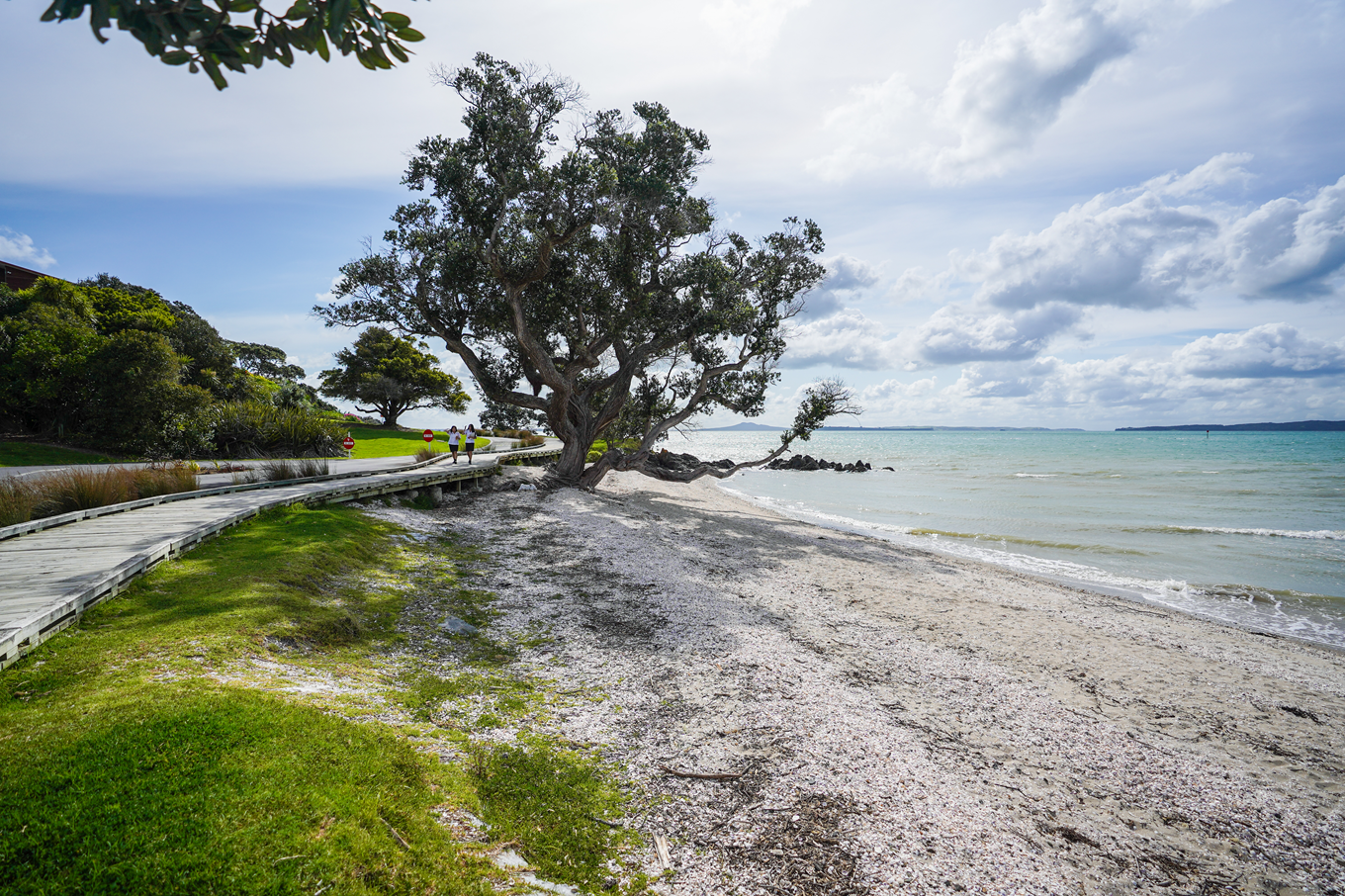
Ō Manawatere Regional Park is one of five regional parks to adopt a te reo Māori name this year.
“We’ve addressed nearly all the track damage left behind from 2023’s severe weather events. Now, our focus is to ensure the network we care for becomes even more significant and valued by Aucklanders and visitors from afar in the years ahead.”
The updated Order in Council provides an important foundation to support this work, Scott says. It was one of many highlights in the FY2025/26 Regional Parks Annual Report [24.7MB] presented to the council’s Community Committee on 13 August.
Under section 139 of the Local Government Act, the Local Government (Auckland Regional Parks) Order enables New Zealand’s Governor-General to protect regional parkland so it cannot be sold or transferred to another owner.
At the council’s request, the Order was amended and applied from 30 July to include land acquired or gifted to the council since the last Local Government (Auckland Regional Parks) Order passed in 2008.
Newly protected under the Order of Council:
• Te Oneroa o Kahu / Long Bay – 57.7ha
• Mahurangi – 113.3ha
• Ō Manawatere – 1.4ha
• Pākiri – 29.5ha
• Te Ārai – 399.1ha
• Te Mūri– 64.1ha
• Te Rau Pūriri – 22.9ha
• Waitākere Ranges – 2.4ha
• Ōrere Point– 4.3ha
• Platt Arboretum – 5.6ha.
For more information on the steps we are taking to protect our regional parks, have a look at this infographic.