


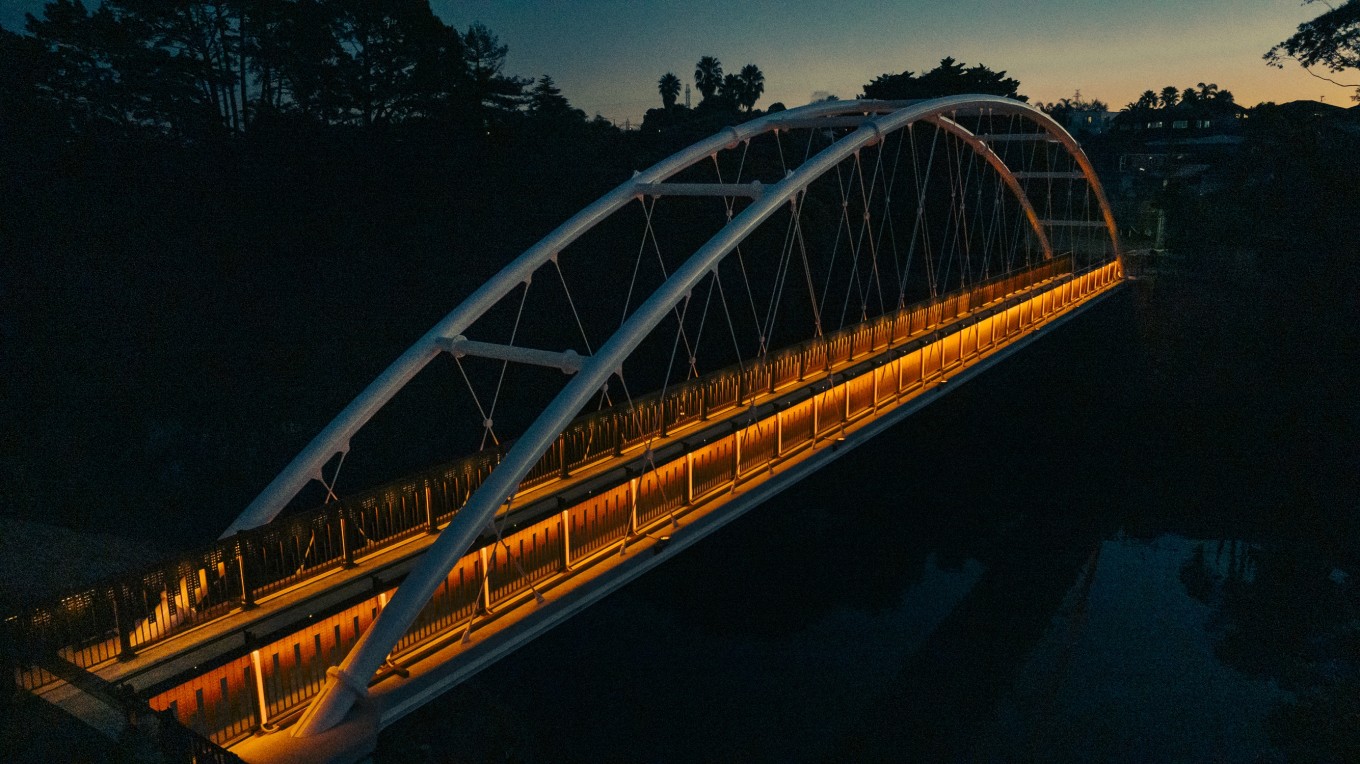
A striking new example of public art as storyteller, connector and innovator now shines with light, that moves in sync with the wind, above the Panmure Basin.
Opening last weekend with a dawn karakia, two sides of the lagoon are connected again with an architecturally exceptional walking and cycling bridge. This replaces an old bridge taken out of service in July 2023.
The shared vision and partnership of Ngāti Pāoa Iwi Trust and Maungakiekie Tāmaki Local Board were central to the delivery of the new bridge, with Auckland Council Public Art expertly integrating art into the infrastructure.
Gifted by Ngāti Paoa, the bridge’s name is Te Kōpua o Hiku. The story behind the name is shared by Drina Paratene:
“Te Kōpua o Hiku means The Deep Pool of Hiku, referring to the deep pool beneath the bridge. The pool was once occupied by Moko-ika-hiku-waru, the lizard-fish with eight tails who is the kaitiaki taniwha of the people of Ngāti Pāoa.”
Auckland Council Head of Arts and Culture Emily Trent says this project is woven with the manaakitanga of Ngāti Pāoa.
“Their kindness, care and willingness to share their history of this place has enriched the outcome of the artwork and the bridge. It has enabled all of us to connect to this whenua,” she says.
The two artists commissioned for the project, Janine Williams and Shannon Novak, were joined by lighting designer Morgann Le Bars of Norwich Group and David Hayes of iion, who built the data-driven technical brilliance of the lighting.
The lighting is programmed to spotlight the arches and balustrades of the bridge. And with a weather station installed on-site, data from the prevailing wind is collected in real time and converted into a pattern of light pulsing with life across the bridge.
The lighting patterns play on the bridge every night from dusk until 10pm.
The ‘breathing’ of the wind shown in the lighting is a metaphor for the breath of the local tupuna (ancestors), kaitiaki taniwha, and Aucklanders and visitors who enjoy the area.
Māori and Croatian iconography
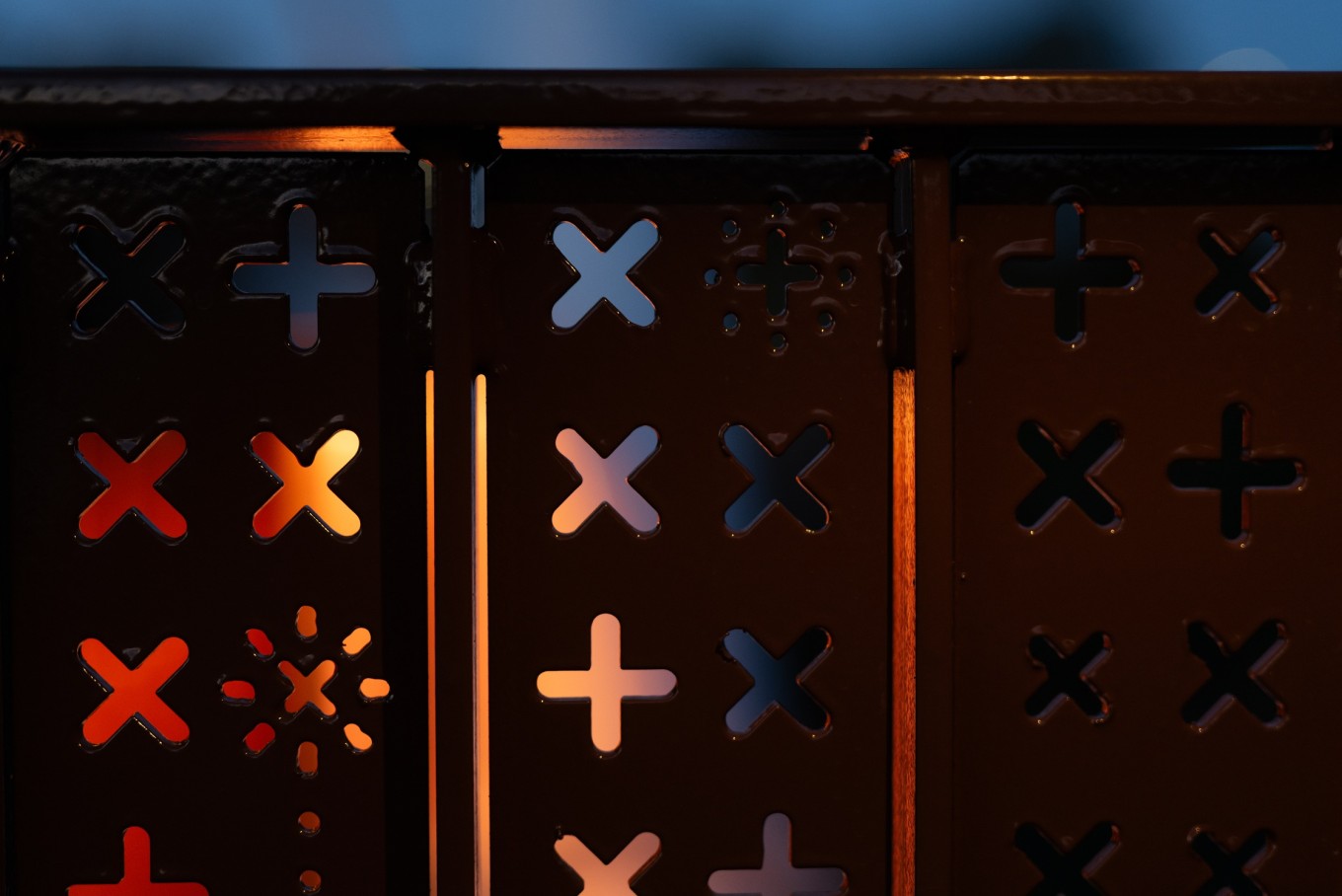
Janine Williams (Ngāti Pāoa, Ngāti Whātua ki Kaipara, Ngāti Mahuta) and Shannon Novak (Ngāti Pākehā, he Tararā ia (Croatian)) have delivered a bi-cultural form of symbolism on the bridge deck and balustrades. Combining forms and shapes of Māori and Croatian descent, the pair has infused iconography of protection and belonging.
In Croatian history, markings on the fingers and hands of children were sometimes applied during war times to protect them from invading forces, helping them return home. Both cultures have histories where iconography – tā moko in Aotearoa – signifies belonging.
Janine is a Tāmaki Makaurau based urban contemporary artist of Māori, English and Scottish descent. One of the first wahine Māori street artists in Aotearoa, she has exhibited and worked extensively across Aotearoa and the world alongside her husband Charles, as established senior urban art practitioners. Her 27-year career is a testament to the power of art as a vehicle for indigenous expression, community connection, and cultural preservation resonating with themes that highlight both natural and spiritual dimensions, while acknowledging her whakapapa connections.
Shannon explains that a unique relationship was struck between Māori and Dalmatian immigrants during the nineteenth century when working together in the kauri gum fields of the Far North. It was a relationship marked by mutual respect and resulted in the nickname Tararā, in reference to the fast-speaking Croatians.
Being in the Croatian diaspora himself, Novak often draws on and expands traditional Croatian art forms such as lacemaking, embroidery, and tattooing. Exploring themes of light, dark, and hope, Novak creates collaborative, socially engaged art to help reduce anxiety, depression, and suicide rates in queer communities globally. His work, spanning painting, photography, installation, sculpture, and curatorial practice, challenges heteronormative systems while fostering diversity, equity, and inclusion for queer identities.
Read more about the opening of the bridge at OurAuckland.
Features of Te Kōpua o Hiku - the bridge
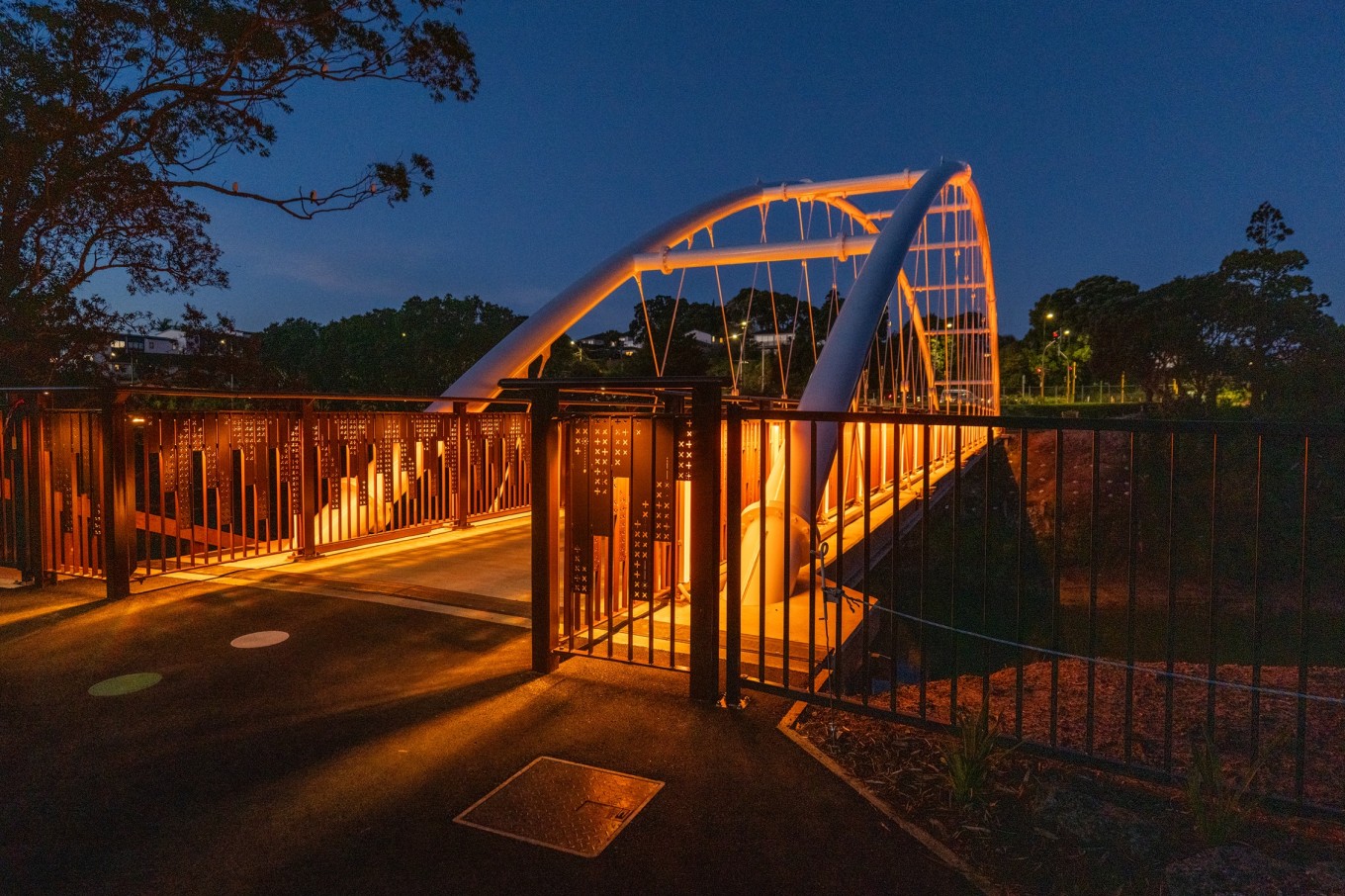
- Bridge weighs 320 tonnes –the weight of around 50 elephants
- There are two piles (vertical foundations) that sit 27 metres deep into the ground
- Overall length is 60 metres (same as the original Jubilee Bridge)
- Width is three metres, the old bridge width was one metre
- There is 380 square metres of new pathway
- 430 new plants have been planted in the surrounding area
- The lifespan of the bridge is expected to be 100 years
Investment in Te Kōpua o Hiku - the artwork
- The expected lifespan of the artwork on the bridge is ten years
- First concept was in 2016
- The council’s total budget for the artwork spanning nine years is $1,196,573
Algorithm-enabled, interactive art
This is the fourth significant work of public art delivered by the team at Auckland Council in partnership with iwi and iion in the past decade, utilising data collected on-site in real time to add to the mystery and meaning of the art experience.
- Uptown - The first was Te Ara I Whiti - The Lightpath delivered by Auckland Council, Auckland Transport and Central Government in 2015, winning international acclaim. Te Ara I Whiti - The Lightpath has been reimagined with new lighting programming since then to reflect current themes like Diwali Festival in 2020, International Day of People with Disabilities in 2023 and Art Week in 2024. For Art Week, iion worked with Shannon Novak to programme the lighting to respond to the movement of people along the path – called Random Acts.
- Warkworth - Te Hokinga Mahara-A Collection of Memories was the second, installed in the ngāhere (bush) opposite the wharf in Warkworth in 2023, combining waiata and kapa haka with programmable lighting which illuminated a stand of totara along a 160-metre section of the riverbank. This was a collaboration with artist Hokimai-Anahera Rosieur (Ngāti Manuhiri, Ngāpuhi, Te Aupōuri), David Hayes and Morgann Le Bars who both worked together on Te Kōpua o Hiku also.
- Myers Park - The third significant example was Waimahara, another iwi-led, multi-sensory, interactive artwork delivered by Auckland Council Public Art – this time in Myers Park. People sing a special waiata and the artwork listens and responds, accompanying them with an awe-inspiring display of light and sound. Read more about this highly-acclaimed artwork which opened in 2023 on Our Auckland.
- Panmure - Te Kōpua o Hiku, the artwork and bridge in Panmure, is the latest example of innovation of this calibre, where art meets technology, creating a beautiful and richly layered asset for Tāmaki Makaurau.