


On Friday 5 September, Manurewa High School marked a day of planting, learning and connection as students, staff and community members worked together to lay the foundations for a thriving food forest.
The project builds on the success of Te Maara Kai o Wirihana, the school’s established urban farm, and marks an exciting new chapter in its journey toward a more sustainable and self sufficient future.
Across the day, more than 200 students planted 350 fruit trees, including bananas, apples, pears, mandarins, grapes and passionfruit. Each tree represents more than just fresh produce. It symbolises the power of young people to nurture the land, work together and take ownership of their future. As these trees take root, so too does a deeper sense of community and connection to place.
Te Maara Kai o Wirihana was first established in 2019 through a partnership between Middlemore Foundation and Manurewa High School. Located beside the school and next to the Manukau Super Clinic, the maara kai has grown significantly over the years, providing students with hands on learning about horticulture, sustainability and food systems.
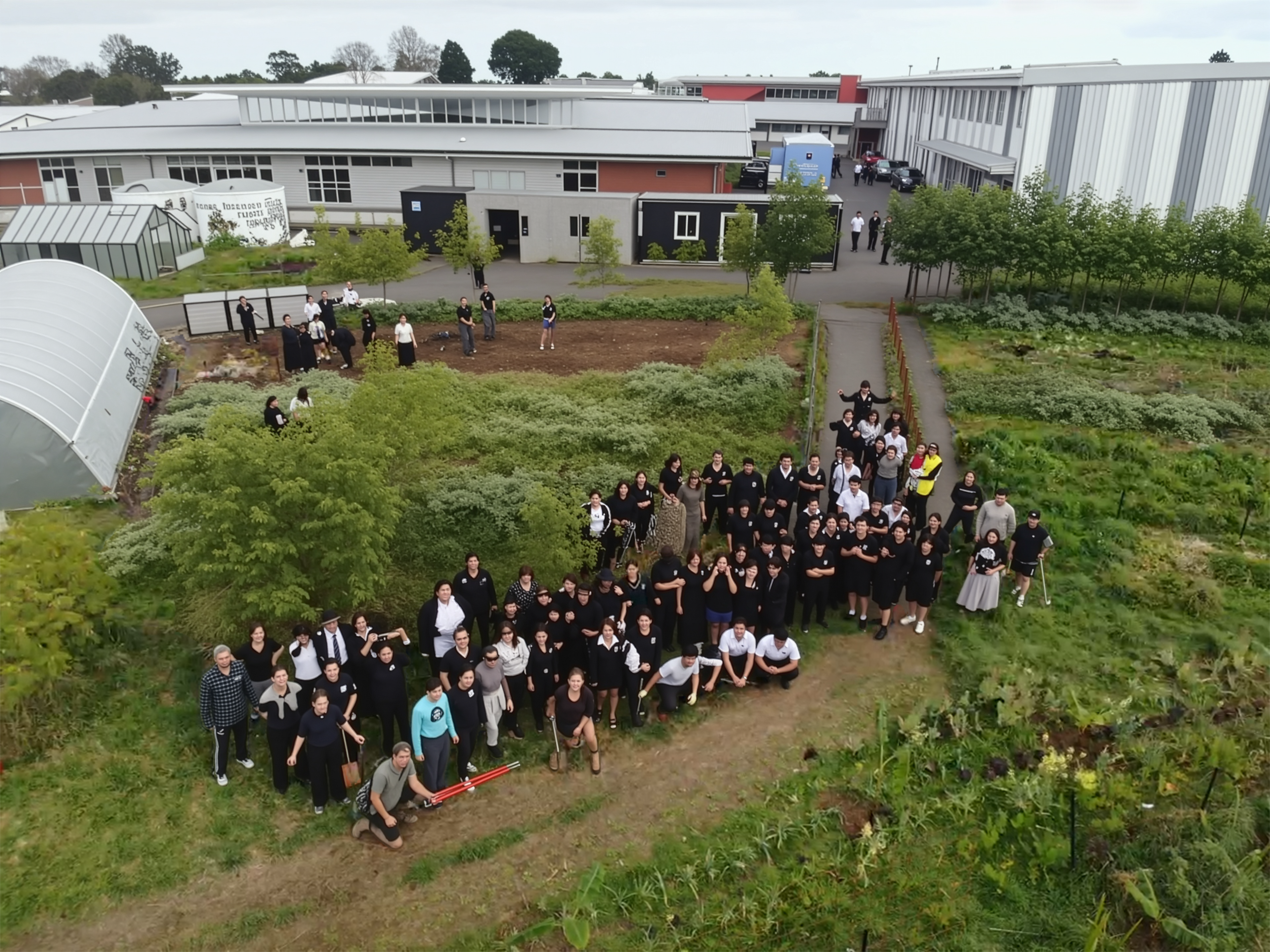
With support from Auckland Council, the new food forest adds another layer to the project, one that will keep growing and giving back to the community for years to come. The Manurewa Local Board is right behind the kaupapa, backing community-led action that boosts wellbeing and builds local pride. It builds on the Board's wider efforts to care for the environment and strengthen community connection, supporting rangatahi, growing local food resilience and inspiring pride in Manurewa.
Auckland Council also has a major long-term project underway to regenerate Te Puhinui - people, place and nature. The food forest will contribute to those efforts by helping to improve the wellbeing of both the natural environment but also the communities of Te Puhinui.
Rory Lenihan Ikin, Low Carbon Specialist from Auckland Council, says the project is a perfect example of community action making a real difference.
“Council is really glad to be supporting this project. The trees planted and cared for by these students will expand Auckland’s tree canopy, provide shade, cool our city and strengthen kai resilience in Manurewa.”
Project Lead Levi Bridson Hall agrees, saying the impact will be long lasting.
“It is incredible what the students and the wider community have achieved with this planting. This food forest will provide an abundance of fruit that will go directly into students’ lunches for years to come.”
Next on the horizon is the creation of a community nursery on site. This will supply native plants to help restore the surrounding wetland, with a launch planned for March 2026. It is another important step in Manurewa’s journey toward a greener, more connected future.