


The Waitematā Station Plaza and eastern glasshouse entrance to the station are open, completing the City Rail Link’s first station neighbourhood in the city centre.
This is the first of three above ground renewal programmes being delivered around CRL stations by the Auckland Council group and City Rail Link Limited, in the city centre.
Chair of the Policy, Planning and Development Committee, Councillor Richard Hills, is excited to see another public space open to Aucklanders and visitors to our city.
“After the recent cleaning and refresh of the eastern glasshouse entrance, it’s fantastic that we have now met another important milestone – the completion and opening of the works above ground in this station neighbourhood.”
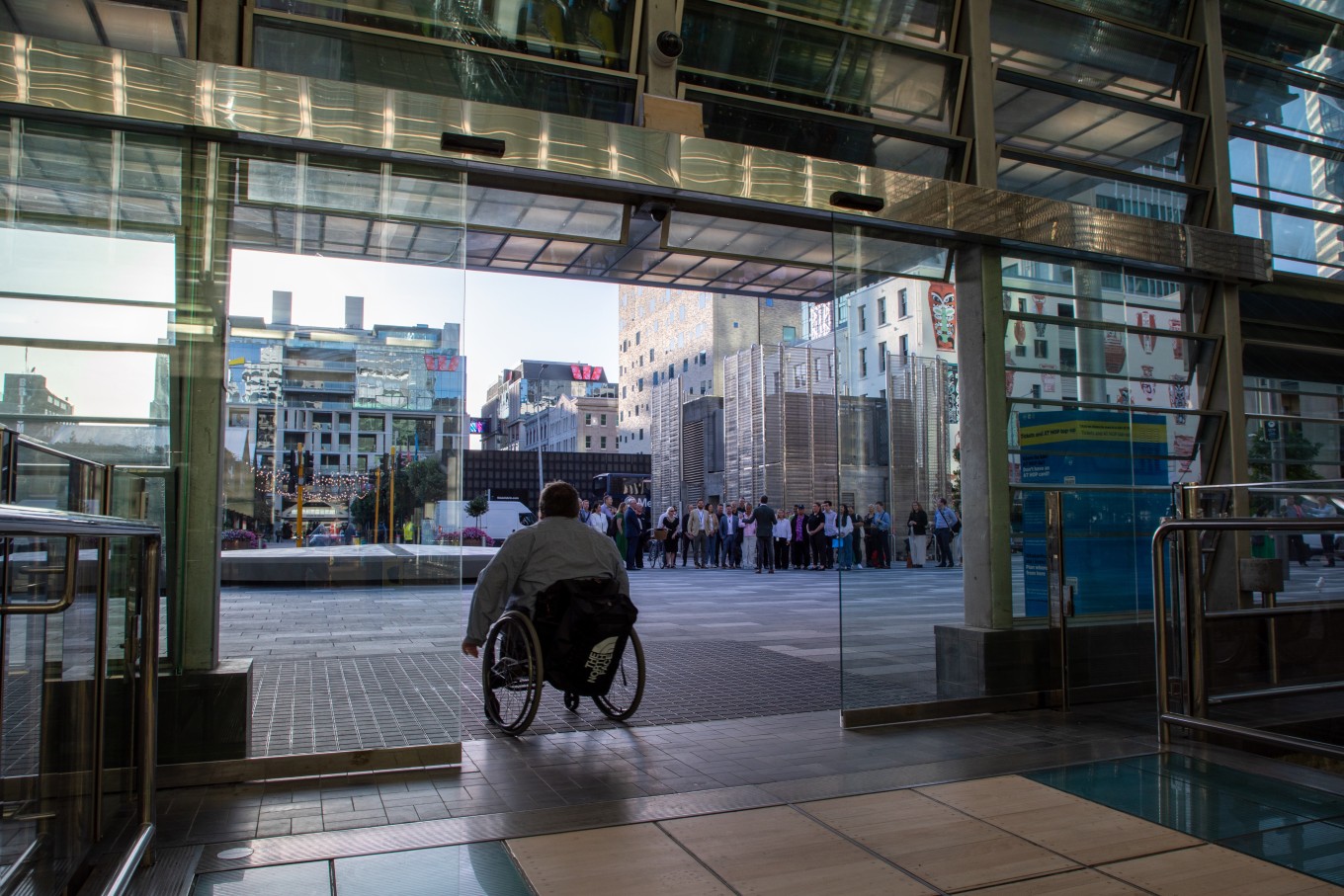
“This area is functional and stunning, in equal proportion. I’m proud to see it finished, ahead of the historic moment later in the year when CRL is up and running,” he says.
Simon Oddie, Auckland Council Priority Location Director – City Centre, says station neighbourhoods are critical to unlocking the full value of the City Rail Link.
“The City Rail Link is much more than a transport project - it’s a city-shaping investment. Station neighbourhoods are where its benefits are truly realised - places that connect people seamlessly to jobs, learning, culture and daily life, while supporting a more walkable, resilient and low-carbon city centre.”
“Over the past decade, we’ve delivered a coordinated programme of upgrades to prepare the city centre for thousands more people arriving by train, bus, ferry, foot and bike. CRL accelerates that shift, and these station environments are the physical expression of a more connected, people-focused Auckland.”
“By designing the stations and their surrounding streets together, we’re creating places that work harder for Auckland - places that support economic activity, encourage public transport use, and make the city centre easier and more enjoyable to get to and move around.”
Referencing the thinking of American urban economist Edward Glaeser, Oddie says the approach reflects the role cities play at a global scale.
“As Edward Glaeser says, ‘Cities are humanity’s greatest invention.’ To unlock that potential, cities need to be well planned and operate efficiently. These station neighbourhoods are about doing exactly that - using major transport investment to shape better urban outcomes above ground, not just below it,” he says.
Simon Oddie adds that the Waitematā Station neighbourhood has become a highly efficient transport hub which is a greener and more attractive place to spend time in now.
“We have trees for shade and other environmental benefits, better lighting, public art, and spaces that reflect the identity of Tāmaki Makaurau. Our partnerships with mana whenua are central to this work. These environments tell a story about place, culture and connection, and we’re proud of what that represents for Auckland’s future,” he says.
The Auckland Council group has worked for more than ten years alongside City Rail Link Limited, Auckland Transport and the private sector to ensure the stations’ surrounding streets and spaces are enhanced and ready for the influx of people expected to arrive when CRL opens later in 2026.
Walk the station neighbourhood
We’ve created a ten-stop walk, through the first finished station neighbourhood, from Quay Street to the station’s glasshouse entrance which has re-opened after many years of construction:
1. Quay Street + 40-year-old pōhutukawa
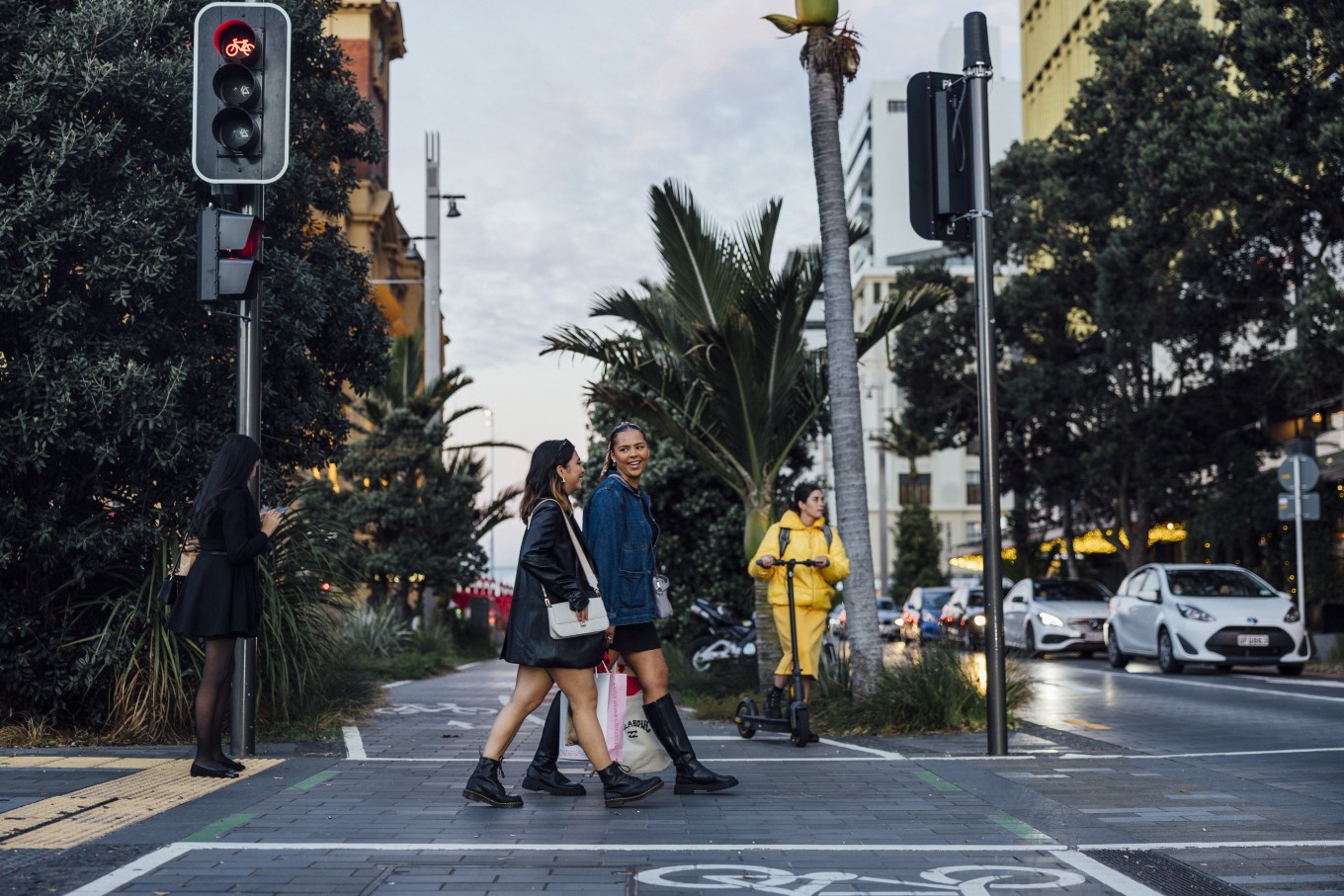
Walk among the pōhutukawa planted along Quay Street as part of its transformation from a busy four-lane road into a leafy two-lane street with wide footpaths and a two-way cycleway. Seven of the trees are more than 40-years-old, providing shade, attracting birds, absorbing carbon and reflecting this coastline centuries ago when Māori voyagers first discovered these shores. The trees’ extraordinary journey is on YouTube.
2. Te Wānanga + kina shaped balustrades
Te Wānanga (on the seaward side of Quay Street) is an architectural take on a rocky tidal shelf, with openings like rock pools and steel balustrades like giant kina shells. The organic shape of the space was inspired by the sandstone headlands of the Waitematā Harbour. Walk through a coastal grove of pōhutukawa, with rongoa (medicine) plants and harakeke (flax) in the gardens, species that were here before the city was built.
3. Handrails
Run your fingers over the handrails on the seaward side of Te Wānanga. You’ll see the carving of Reuben Kirkwood (Ngai Tai ki Tāmaki) and the weaving of Tessa Harris (Ngai Tai ki Tāmaki). Both elements are part of the downtown programme’s partnership with mana whenua, ensuring it tells the authentic story of this place.
4. Sea wall
It's not visible, but it's important for our resilience as a waterfront city. The downtown upgrade began by strengthening the seawall that Quay Street sits on, protecting the city for the next 100 years from rising sea levels and seismic events. The care and precision the project’s engineers put into the design and construction of this strengthened seawall was extraordinary.
5. WWI beacon
Look along to the Albert Street bus interchange, and you’ll notice an exquisite glass orb and spire have returned to the top of the WWI Memorial Beacon in Quay Street. Built in 1915, the monument symbolised a beacon of hope and the safe return home of our soldiers. It also served as a functioning light guiding ferries to city wharves. In 2022, the council group oversaw the return of the re-made ironwork spire and glass orb. Read the story on OurAuckland.
6. Canopies of Te Ngau o Horotiu
If you’re catching a ferry from the city centre, departing from one of the six outer piers, look up and see the mahi toi of artist Maaka Potini (Ngāti Tamaoho). The design honours our earliest voyagers. These 100 tonne canopies were craned into position at night in 2021. Read more on OurAuckland.
7. Te Komititanga
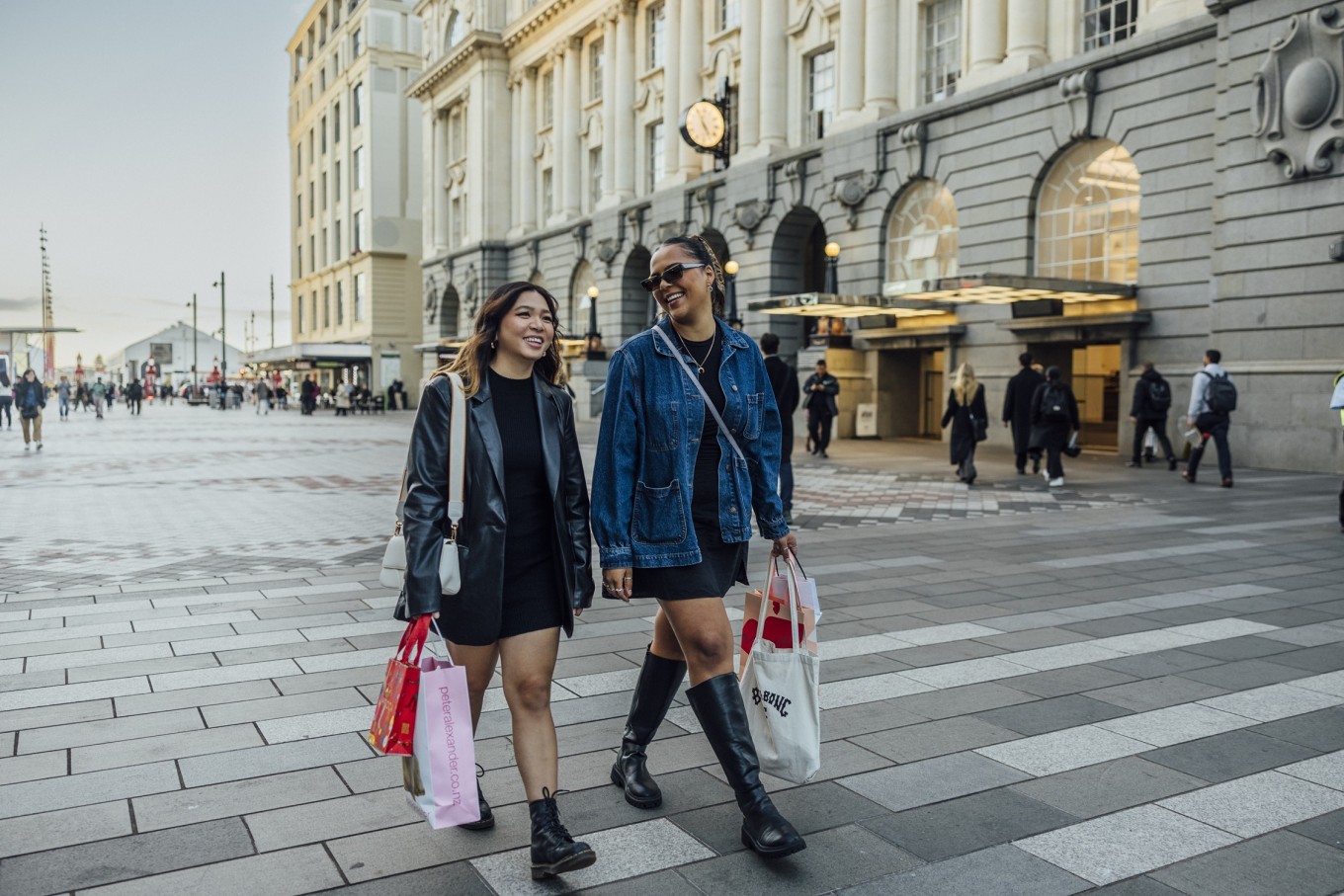
Breathe in the scale of this magnificent city square. Its name reflects the mixing of people, converging from multiple transport points, and the place where the waters of the Waitematā and Waihorotiu stream merge. Look down and see a whāriki (welcome mat) made from basalt pavers laid in a pattern by artist Tessa Harris and her team of weavers.
8. Restored CPO
The restored, heritage-listed Chief Post Office (CPO), the western entrance to Waitematā Station, was built in the early 1900s. Inside you’ll see a beautiful dome that is fit for a cathedral. Look down and you’ll see the original foundations encased in glass, telling their story. In a complex feat of engineering, the building’s weight was transferred to its new foundations ahead of the construction of the City Rail Link’s twin tunnels below.
9. Galway Street + Tyler Street
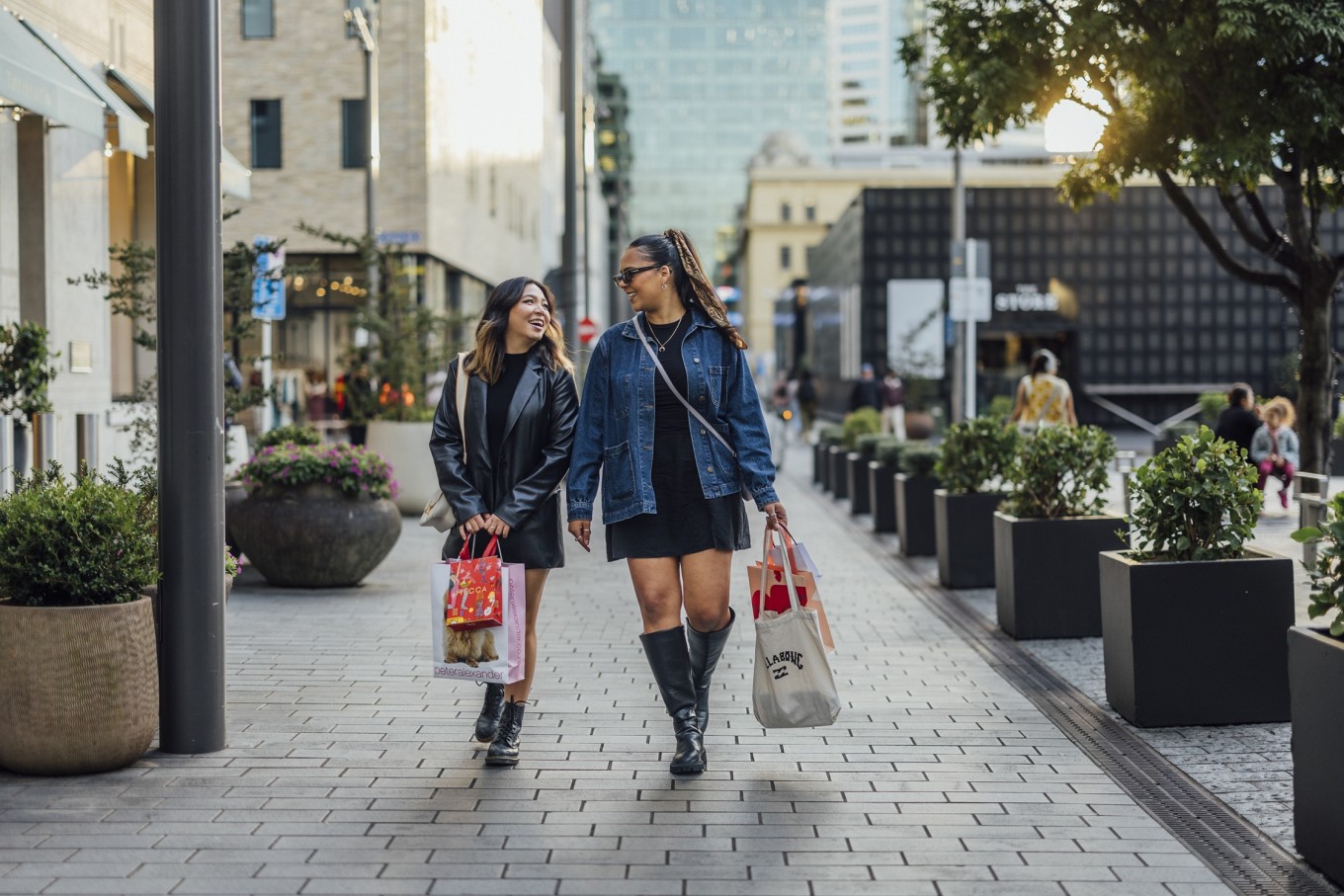
Continue along one of two stunning shared spaces: Galway Street or Tyler Street. Once you’ve let yourself be captivated by the area’s urban charm, the smoothed edges of either street will lead you to the final piece in this station neighbourhood, delivered by City Rail Link Limited and the Auckland Council group – Waitematā Station Plaza.
10. Skylid + Waitematā Station Plaza
Waitematā Station Plaza and the station’s striking eastern entrance (the Commerce Street entrance) are open.
Designed in partnership with mana whenua, the Skylid is a central feature. It carries a sand-blasted design depicting the movement of converging waters. Artist Graham Tipene (Ngāti Whātua Ōrākei, Ngāti Kahu, Ngāti Hine, Ngāti Hauā, Ngāti Manu) describes his artwork as a map of the historical waterways coming together.
The new plaza, with eight new native trees, sits between two larger squares – Te Komititanga and Takutai Square, already favourite public spaces in this newly finished station neighbourhood.
This ten-stop walk covers just some of the transformational projects delivered around Waitematā Station.
Earlier stories about the area’s renewal, led by both public and private sectors, can be found on the development news page of OurAuckland. Two examples can be read about the city centre's transformation and a number of significant projects in the past five years.